

Plesiometacarpal Deer (Subfamily Cervinae)
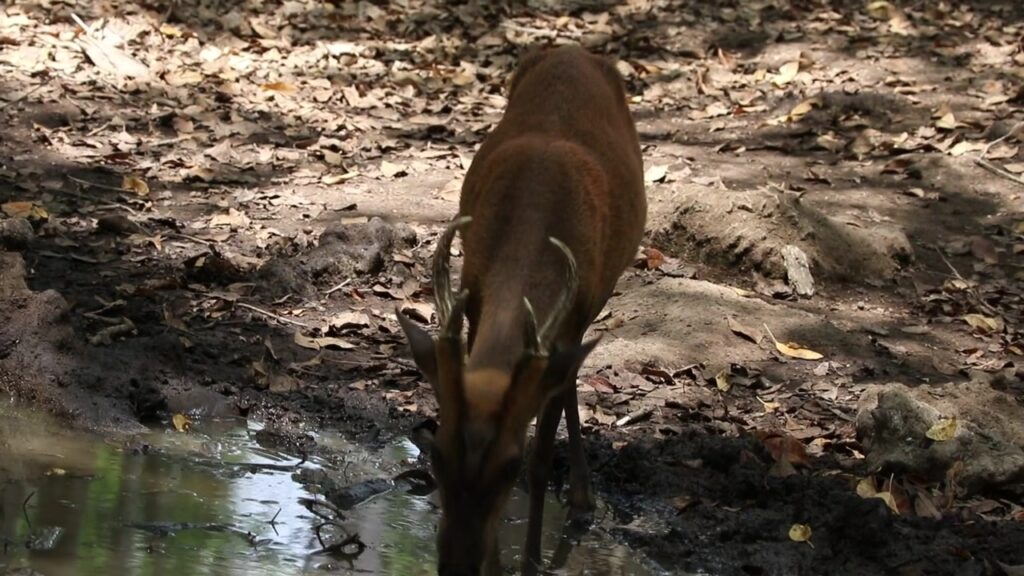
The subfamily Cervinae comprises a major group of deer within the family Cervidae, order Artiodactyla, and class Mammalia. Commonly referred to as Old World deer, its members are native primarily to Europe, Asia, and parts of North Africa, although several species have been introduced to other regions. Cervinae includes well-known deer such as red deer, sika deer, fallow deer, and muntjacs, as well as other species adapted to a wide variety of terrestrial habitats. These mammals occupy temperate forests, tropical woodlands, grasslands, mountainous regions, and forest edges, where they function as important herbivores and influence vegetation dynamics.
Members of Cervinae display considerable variation in body size, proportions, and external appearance. Some species, such as the red deer, are large, robust animals with long legs and powerful bodies, whereas muntjacs are considerably smaller and often have compact builds suited to moving through dense undergrowth. Their coats may range from reddish brown and chestnut to grey, dark brown, or nearly black, with seasonal changes occurring in several species. Some possess pale markings on the rump, throat, or underside, while others have conspicuous white spots, particularly during particular stages of development or throughout adulthood. These differences in coloration and body structure reflect adaptations to local habitats and provide useful characteristics for distinguishing species.
Antlers are among the most recognizable features of Cervinae. In most species, adult males develop branched bony structures that grow from pedicles on the skull. During their growth, the antlers are covered in a soft, vascular layer of skin known as velvet, which supplies nutrients to the developing bone. Once growth is complete, the velvet dries and is removed through rubbing against vegetation or other surfaces. Antlers are generally shed and regrown annually, with the timing influenced by reproductive cycles, age, and environmental conditions. The size and complexity of antlers vary among species, ranging from the relatively small structures of some muntjacs to the large, multi-branched antlers of mature red deer. Antlers serve primarily in social displays and competition between males for access to females.
The head and sensory systems of Cervinae are adapted for detecting predators, locating food, and communicating with other deer. Most species have large, laterally positioned eyes that provide a broad field of vision, while their mobile ears help detect sounds from different directions. Their sense of smell is particularly well developed and plays an important role in recognizing individuals, identifying reproductive condition, and detecting potential danger. Many species possess specialized scent glands that release chemical signals used in communication and territorial marking. Vocalizations, body posture, facial movements, and antler displays also contribute to interactions between individuals, especially during courtship, territorial disputes, and encounters between mothers and their young.
The geographic distribution of Cervinae is broad, with native populations occurring across much of Europe and Asia and extending into parts of North Africa. Individual species occupy distinct ranges, and their habitat requirements differ considerably. Red deer are associated with forests, woodland margins, and open upland landscapes, while sika deer commonly inhabit temperate forests and mixed woodland. Fallow deer frequently use a combination of woodland and open grassland, and muntjacs are often associated with dense forest undergrowth in southern and eastern Asia. Some species have adapted to agricultural landscapes and human-modified environments, while others depend more heavily on relatively undisturbed habitats. Introduced populations of certain cervines now occur in regions outside their natural ranges.
Cervinae are predominantly herbivorous and consume a wide range of plant material, including grasses, leaves, shoots, buds, herbs, fruits, flowers, and young woody growth. Feeding preferences vary with species, season, and habitat. Some deer are primarily browsers, feeding on leaves and woody vegetation, while others combine browsing with grazing. Many species alter their diets throughout the year in response to changes in plant availability and nutritional quality. Like other ruminants, they possess a multi-chambered stomach in which microorganisms assist in fermenting plant material and breaking down cellulose. Food is regurgitated and rechewed as cud before further digestion, allowing these animals to obtain nutrients from vegetation that is otherwise difficult to digest.
Behavioural patterns within Cervinae range from largely solitary activity to the formation of substantial social groups. Some species, including many muntjacs, are commonly encountered alone or in pairs, while red deer may form herds that vary in composition throughout the year. In species with pronounced seasonal breeding cycles, males and females may remain in separate groups outside the mating season. During the rut, males compete for mating opportunities through vocalizations, scent marking, displays, and physical contests. Red deer stags, for example, produce characteristic roaring calls and may engage in antler-to-antler battles. These behaviours help establish dominance and influence reproductive success, although the mating systems differ among species.
Reproduction in Cervinae is generally seasonal in species living in temperate regions, where births are timed to coincide with periods of favourable food availability. Following mating, females undergo a gestation period that varies among species, usually lasting several months. Most give birth to a single fawn or calf, although twins occur in some species. Newborns are often able to stand and move shortly after birth, but they may remain concealed in vegetation while their mothers forage nearby. Spotted coats in some young deer provide camouflage against dappled light and vegetation. Maternal care includes nursing, protection, and the gradual introduction of young to more independent feeding and movement. The age at which offspring become reproductively mature varies with species, sex, nutrition, and environmental conditions.
The subfamily includes several distinctive evolutionary lineages, traditionally grouped within tribes such as Cervini and Muntiacini, although taxonomic arrangements vary among classifications. Cervini includes larger deer such as red deer, sika deer, and fallow deer, while Muntiacini includes muntjacs and related forms. The evolutionary relationships among cervines have been investigated using anatomical characteristics, fossil evidence, and molecular genetics. These studies reveal a complex history of diversification involving changes in body size, antler development, habitat use, and geographic distribution. Classification at the species and genus levels has also changed as new evidence has clarified relationships among closely related deer.
Ecologically, Cervinae plays an important role in shaping vegetation and sustaining terrestrial food webs. Browsing and grazing can influence seedling survival, plant succession, and the structure of woodland understories. Their movements redistribute nutrients through dung and urine, while their remains provide food for scavengers and decomposers. Cervines are also prey for large carnivores, including wolves, tigers, leopards, and other predators in regions where their distributions overlap. In areas where deer populations become exceptionally dense, their feeding can suppress forest regeneration and alter plant communities. Conversely, where populations decline sharply, changes in browsing pressure may influence the recovery of vegetation and the availability of resources for other animals.
The conservation status of Cervinae varies substantially among its constituent species. Some, such as red deer and fallow deer, have extensive distributions or established introduced populations, while certain Asian deer face serious threats from habitat loss, hunting, and fragmentation. Forest clearance, agricultural expansion, road development, and illegal wildlife trade can reduce suitable habitat and isolate populations. Conservation efforts include protected areas, habitat restoration, wildlife corridors, regulated hunting, and breeding or reintroduction programmes where appropriate. Managing introduced populations is also important in regions where non-native deer compete with local herbivores or place excessive pressure on vegetation.
Overall, Cervinae represents a diverse subfamily of deer distinguished by its varied antler forms, herbivorous adaptations, flexible social behaviour, and broad ecological distribution. Its members range from small, elusive forest dwellers to large deer that occupy open woodlands and upland landscapes. Through their feeding habits, reproductive strategies, and interactions with predators and plants, cervines contribute significantly to the structure and functioning of terrestrial ecosystems. Their diversity also makes them important subjects for evolutionary research, wildlife management, and biodiversity conservation.