Bali Wildlife
Every Spices Matter


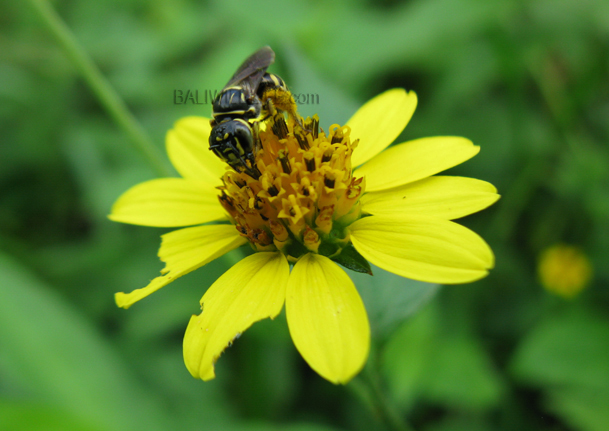
Ceratinini is a tribe within the subfamily Xylocopinae (Family Apidae, Order Hymenoptera), comprising a group of bees commonly known as small carpenter bees. Members of this tribe are widely distributed across the world, particularly in tropical and temperate regions, and are commonly found in gardens, grasslands, forest edges, and other habitats with abundant flowering plants.
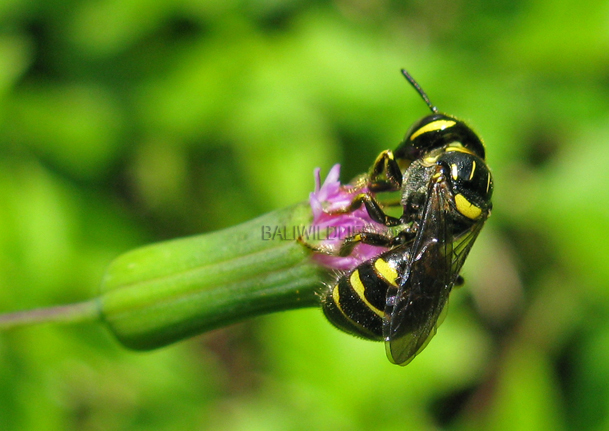
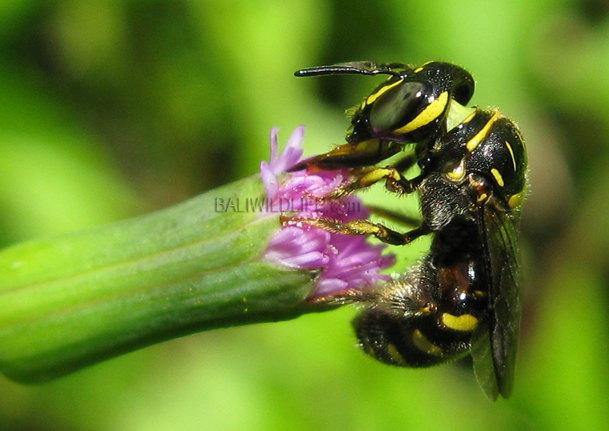
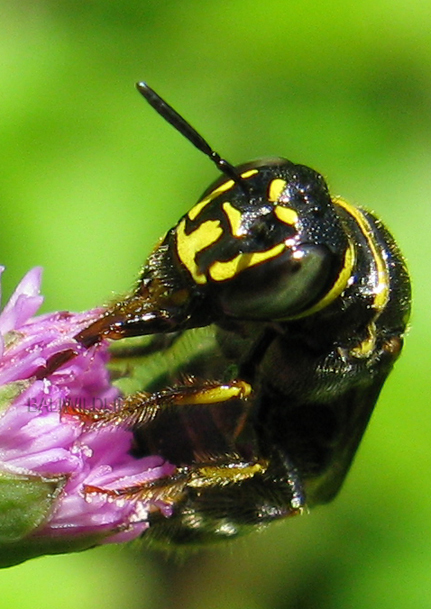
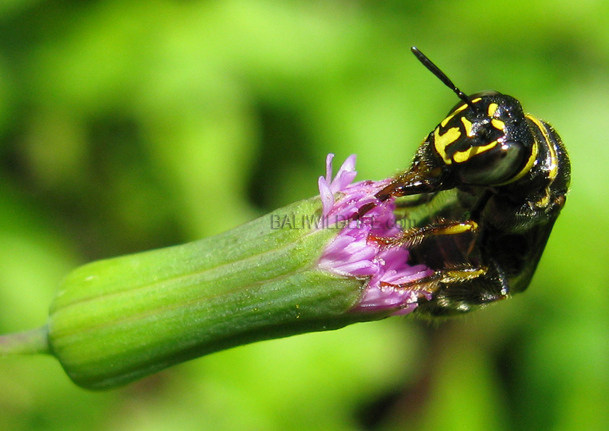
Bees of the tribe Ceratinini are generally small, slender, and less hairy than many other bees. They often exhibit metallic coloration, such as green, blue, or black, sometimes with pale markings on the face or body. The head is relatively large, with well-developed compound eyes and short antennae. Unlike larger carpenter bees, they have a more delicate and elongated body form.
A defining feature of Ceratinini is their nesting behavior. These bees typically nest in soft plant stems, pithy twigs, or similar materials. Females excavate tunnels within these substrates and create a series of brood cells, each provisioned with pollen and nectar for developing larvae.
The life cycle involves complete metamorphosis. Larvae develop within the nest cells, feeding on stored provisions. Some species exhibit simple forms of social behavior, including maternal care, where the female guards the nest and may interact with developing offspring.
Adults feed on nectar and pollen and are active pollinators of a variety of flowering plants. Their small size allows them to access flowers that may be less accessible to larger bees.
The tribe primarily includes the genus Ceratina, which contains numerous species worldwide.
Ecologically, Ceratinini plays an important role in pollination, especially for small flowers and in diverse plant communities. Although they are often overlooked due to their size, they contribute significantly to ecosystem functioning and plant reproduction.