

Flat-tailed and Bark Scorpions (Superfamily Buthoidea)
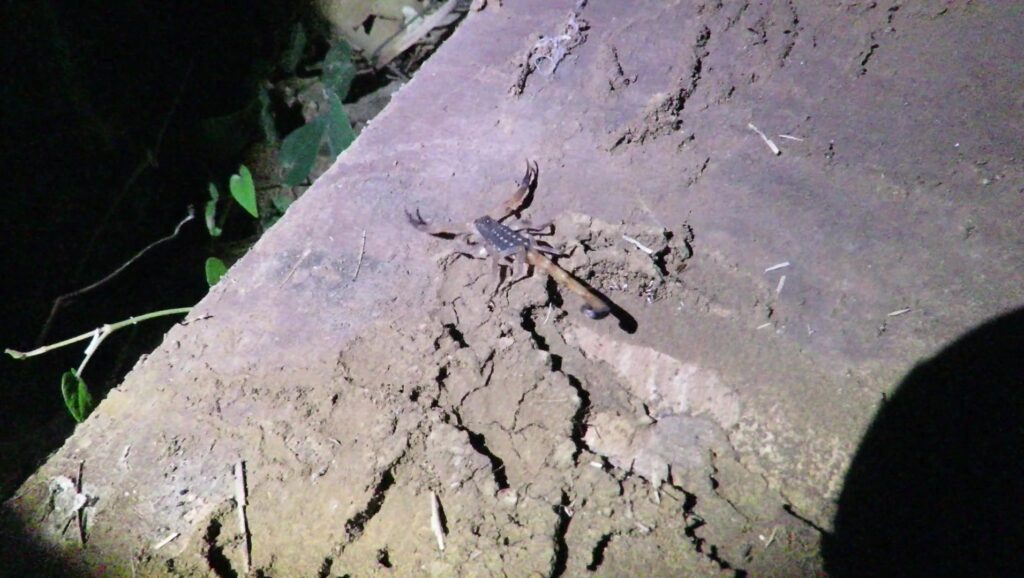
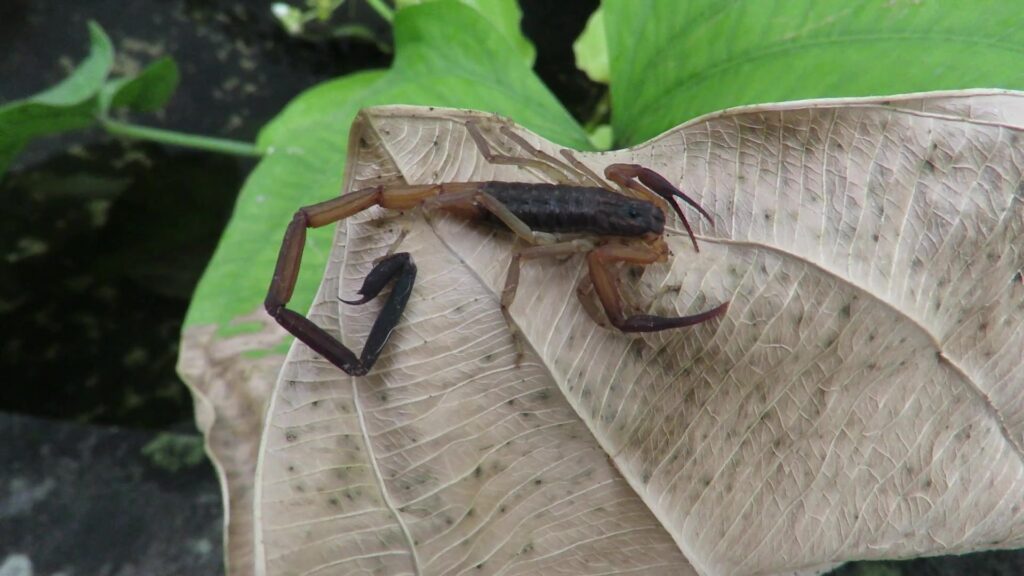
The superfamily Buthoidea is a major taxonomic grouping of scorpions within the class Arachnida and order Scorpiones. It is closely associated with the family Buthidae, which contains a large diversity of scorpions distributed across tropical, subtropical, and warm temperate regions of the world. Members of this lineage inhabit a wide variety of environments, including deserts, savannas, grasslands, tropical forests, rocky slopes, and human-modified landscapes. They are known for their specialized sensory systems, predatory behaviour, segmented tails, and venom-producing stingers. The exact composition and taxonomic rank of Buthoidea may vary among classification systems as researchers refine the evolutionary relationships among scorpion lineages.
Scorpions associated with Buthoidea generally possess the characteristic body organization of arachnids, with the body divided into the prosoma and opisthosoma. The prosoma bears the eyes, mouthparts, pedipalps, and four pairs of walking legs. The opisthosoma consists of a broad anterior portion, the mesosoma, and a narrower posterior region, the metasoma, commonly called the tail. The metasoma terminates in a telson containing venom-producing tissue and a sharp sting, or aculeus. Body size and colour vary widely among species, ranging from small, pale-yellow scorpions to larger brown, reddish, or darkly coloured forms.
One of the most recognizable characteristics of many buthoid scorpions is the combination of relatively slender pedipalps and an elongated metasoma. The pedipalps terminate in pincers, known as chelae, which are used to grasp prey and interact with other scorpions. In many species, these pincers are comparatively narrow, while the tail is well developed and can be rapidly positioned during prey capture or defence. However, these features vary among genera and should not be treated as universal characteristics of every member. The exoskeleton provides structural support and protection, while specialized sensory hairs help the animal detect vibrations and movements in its surroundings.
The geographic distribution of Buthoidea-associated scorpions is extensive, particularly in warm regions of Africa, Asia, the Middle East, and the Americas. Many species are especially abundant in arid and semiarid environments, where they occupy deserts, dry scrublands, and rocky terrain. Others occur in tropical forests, savannas, and grasslands. They often shelter beneath stones, bark, fallen logs, or leaf litter, while some species excavate burrows in soil. Certain species can also persist in agricultural landscapes and around buildings, where crevices and other sheltered locations provide suitable daytime refuges. Their distribution depends on temperature, humidity, substrate, prey availability, and evolutionary history.
Members of Buthoidea are predominantly nocturnal predators that feed on insects, spiders, and other small arthropods. Larger species may occasionally capture small vertebrates. Scorpions detect prey through ground vibrations, chemical cues, and movements sensed by specialized hairs on their legs and pedipalps. Once prey is located, the scorpion grasps it with its pincers and may use its sting to subdue it. Venom use varies according to prey size, resistance, and the species involved. Digestive fluids are applied to prey tissues, allowing the scorpion to consume liquefied nutrients. This predatory strategy enables these arachnids to exploit food resources that may be irregularly distributed in dry and other challenging habitats.
Venom is a significant biological feature of many species traditionally associated with Buthoidea, particularly those in the family Buthidae. Scorpion venom contains a complex mixture of peptides and other compounds that affect prey physiology, often by interfering with nerve-cell ion channels. Its primary functions are prey capture and defence against potential predators. Venom composition and medical significance differ considerably among species, and external appearance alone cannot reliably establish how dangerous a scorpion may be. Some species can cause severe envenomation in humans, making cautious observation and avoidance of direct handling important. A suspected serious sting requires prompt medical assessment.
The sensory biology of buthoid scorpions is highly specialized for life in low-light environments. Although they possess median and lateral eyes, vision is generally less important for prey detection than mechanical and chemical sensing. Their sensory hairs can detect subtle air movements and vibrations, helping them locate prey or respond to approaching threats. They also possess pectines, paired comb-like organs on the underside of the body that examine the substrate and detect chemical and physical cues. These organs are important in environmental exploration and may contribute to reproductive behaviour. Together, these sensory adaptations allow scorpions to navigate, hunt, and communicate effectively while remaining concealed.
Reproduction in scorpions involves courtship behaviour and the transfer of sperm through a spermatophore. In many species, the male grasps the female’s pedipalps and guides her across a surface while searching for a suitable place to deposit the spermatophore. The female subsequently takes up the sperm packet, enabling fertilization. Scorpions generally give birth to live young rather than laying eggs externally. Newborns climb onto the mother’s back and remain there until their first moult, after which they become increasingly independent. The number of offspring, reproductive interval, and developmental duration vary according to species, food availability, and environmental conditions.
Ecologically, Buthoidea-associated scorpions play important roles as predators of invertebrates and as prey for larger animals. By consuming insects and other arthropods, they contribute to the regulation of local invertebrate populations. They are also eaten by reptiles, birds, small mammals, amphibians, and other predators capable of capturing them. Burrowing species can influence soil structure and create sheltered microhabitats, while their activity contributes to the flow of energy through nocturnal food webs. Their abundance is affected by climatic conditions, prey availability, habitat disturbance, and the availability of suitable hiding places.
The classification of Buthoidea reflects continuing research into scorpion evolution. Traditional taxonomy has relied on features such as pedipalp structure, metasomal proportions, pectines, body segmentation, and other anatomical characteristics. Molecular studies have added new information about evolutionary relationships and have prompted revisions to the placement of certain families and genera. Because some classification systems use Buthoidea as a superfamily while others organize the same lineages differently, the precise limits of the group should be understood in the context of the taxonomic authority being followed. The family Buthidae remains central to most discussions of this grouping.
Overall, Buthoidea represents an important lineage in scorpion diversity, encompassing predators with specialized sensory structures, venomous stingers, and reproductive adaptations suited to terrestrial life. Its members occupy a wide range of habitats and contribute to the ecological balance of many ecosystems through their feeding relationships. Although certain species are medically significant, scorpions are also valuable components of natural communities. Understanding their classification, behaviour, and species-specific biology is essential for appreciating their evolutionary diversity and ecological importance.