

Arrowbreasted Scorpions (Family Buthidae)
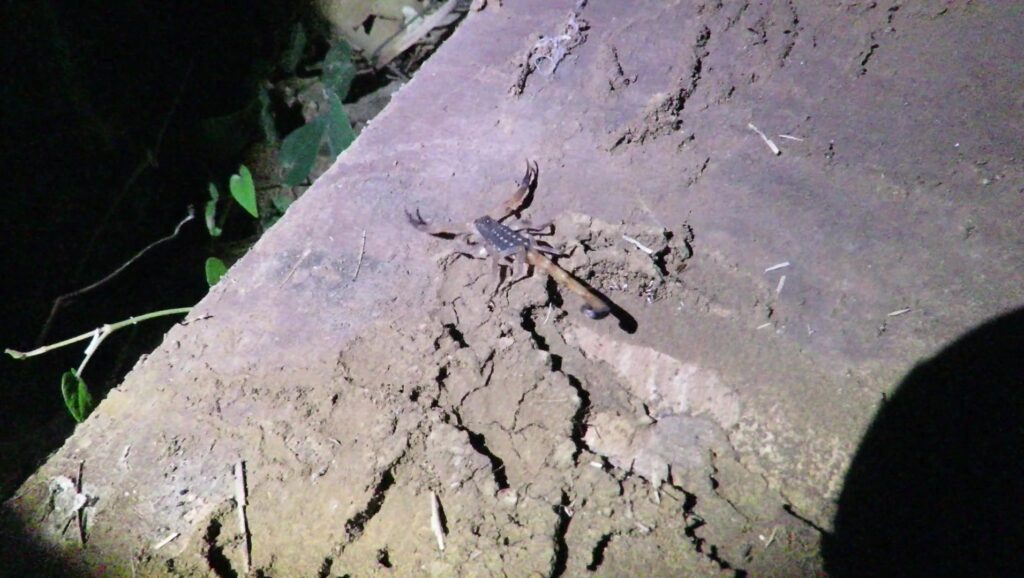
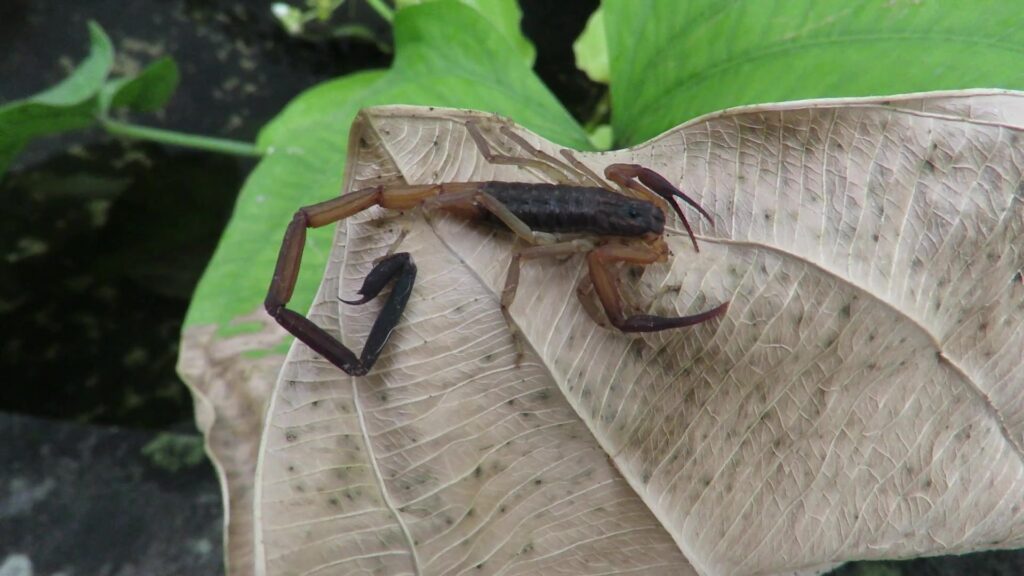
The family Buthidae is the largest family of scorpions within the order Scorpiones, class Arachnida. Its members are widely distributed across tropical, subtropical, and warm temperate regions of the world, inhabiting deserts, savannas, grasslands, forests, rocky landscapes, and human-modified environments. Commonly known as buthid scorpions, they include numerous species characterized by specialized sensory structures, relatively slender pincers in many genera, elongated tails, and venom-producing stingers. The family includes ecologically diverse predators, some of which are medically significant because their venom can cause severe poisoning in humans. Despite this reputation, buthids also perform important ecological functions as predators of invertebrates and as components of terrestrial food webs.
Members of Buthidae vary considerably in size, colour, and body proportions. Many species are small to medium-sized, although some grow substantially larger. Their coloration includes pale yellow, sandy brown, reddish brown, orange, grey, and black, often providing camouflage against soil, rocks, bark, or leaf litter. Desert species are frequently pale, whereas species inhabiting darker substrates or forest environments may have more strongly pigmented bodies. The exoskeleton is divided into distinct anatomical regions, including the prosoma, mesosoma, metasoma, and telson. These structures support movement, protection, feeding, reproduction, and defence.
One of the characteristic features of many buthid scorpions is the shape of their pedipalps, which terminate in pincers known as chelae. In numerous genera, the pincers are relatively slender, while the metasoma, or tail, is elongated and capable of rapid movement. This combination is common but not universal, and body proportions differ among genera and species. The tail consists of several articulated segments and ends in a telson containing venom-producing tissue and a sharp sting called the aculeus. The sting is used primarily to subdue prey and defend against threats. Walking legs provide stability and mobility across uneven terrain, while the pedipalps help capture prey and manipulate objects.
The family Buthidae has an extensive geographic distribution, with species occurring across Africa, Asia, Europe, the Middle East, and the Americas. Many species are especially diverse in arid and semiarid regions, where they occupy deserts, dry grasslands, and rocky slopes. Others inhabit tropical rainforests, savannas, agricultural landscapes, and areas surrounding human settlements. Depending on the species, scorpions may shelter beneath stones, inside crevices, under tree bark, within fallen logs, or in burrows excavated in soil. These shelters provide protection from predators and environmental extremes, especially during the daytime. Temperature, humidity, substrate, and prey availability all influence their distribution and activity.
Buthid scorpions are predominantly nocturnal predators that feed on insects, spiders, and other small arthropods. Larger species may occasionally capture small vertebrates. They locate prey using a combination of sensory hairs, ground vibrations, chemical cues, and movements detected through their legs and pedipalps. When prey comes within reach, the scorpion seizes it with its pincers and may use its sting to immobilize it. Small or weak prey can sometimes be subdued without venom, allowing the scorpion to conserve its venom supply. Digestive enzymes help break down prey tissues externally before the resulting fluids are consumed. This feeding strategy allows buthids to exploit prey in habitats where food may be irregularly available.
Venom is a defining biological feature of the family Buthidae. The venom contains a complex mixture of peptides, proteins, and other substances that can affect the nervous systems of prey animals. Many components act on ion channels involved in nerve and muscle function, producing rapid physiological effects. The composition and potency of venom vary considerably among species. Some buthids, including certain species of Androctonus, Leiurus, Parabuthus, and Tityus, are medically important because their stings can cause serious systemic symptoms. However, not every member of the family poses the same level of danger, and appearance alone is not a reliable way to assess medical risk. Scorpions should not be handled with bare hands, and suspected serious envenomation requires prompt medical attention.
The sensory systems of Buthidae are adapted to detecting prey and navigating in low-light conditions. Although these scorpions possess median and lateral eyes, vision is generally less important than mechanical and chemical sensing. Fine sensory hairs detect vibrations and air movements, helping individuals identify approaching prey, predators, or other scorpions. A distinctive pair of comb-like structures called pectines occurs on the underside of the body. These organs investigate the substrate and detect chemical and physical cues that may help scorpions assess their surroundings and locate suitable mates. Together, these adaptations allow buthids to hunt efficiently at night and remain concealed during periods of environmental stress.
Reproduction in Buthidae generally involves courtship and the transfer of sperm through a spermatophore. During mating, the male commonly grasps the female’s pedipalps and guides her across a surface while locating an appropriate place to deposit the sperm packet. The female then takes up the spermatophore, allowing fertilization to occur internally. Unlike most insects, scorpions give birth to live young rather than laying eggs externally. Newborn scorpions climb onto the mother’s back and remain there until their first moult. After leaving the mother, they gradually become independent and begin hunting small prey. The number of offspring, gestation period, and time to maturity vary among species and depend partly on environmental conditions and food availability.
Buthidae plays an important ecological role in terrestrial environments. As predators, these scorpions help regulate populations of insects and other small arthropods. They also provide food for birds, reptiles, amphibians, mammals, and other predators capable of capturing them. Their burrowing and sheltering activities may influence small-scale soil conditions and the distribution of organisms using similar refuges. In arid environments, where biological productivity can be limited, scorpions are significant components of nocturnal food webs. Their activity patterns are strongly affected by temperature, moisture, seasonal rainfall, and prey abundance.
The family contains numerous genera and species with considerable morphological and ecological diversity. Well-known genera include Androctonus, Centruroides, Hottentotta, Leiurus, Mesobuthus, Parabuthus, and Tityus. Classification and species boundaries have been refined through anatomical comparisons, examination of reproductive structures, and molecular phylogenetic studies. Important identifying features include the shape of the pedipalps, proportions of the metasomal segments, arrangement of sensory structures, pectine characteristics, and patterns of body granulation. Because closely related species can look similar, accurate identification may require specialist examination or genetic evidence.
Although many buthid species tolerate harsh environments, their populations can be affected by habitat destruction, pesticide use, pollution, and changes in climate. Urban development and agricultural expansion may eliminate natural refuges, while pesticides can reduce their prey or directly poison scorpions. Some species adapt to disturbed environments and may become more frequently encountered around human settlements, increasing opportunities for accidental stings. Conservation requirements vary widely among species, particularly those with restricted distributions or specialized habitat needs. Protecting natural habitats and improving knowledge of local scorpion diversity are important for maintaining ecological communities and reducing unnecessary conflicts with people.
Overall, Buthidae is a highly diverse family of scorpions distinguished by its broad geographic distribution, specialized predatory adaptations, and remarkable variation in venom chemistry. Its members occupy important ecological roles as invertebrate predators and prey, while some species are of considerable medical importance. Their sensory systems, reproductive biology, and ability to inhabit environments ranging from deserts to forests demonstrate the evolutionary success of scorpions as terrestrial arachnids. Understanding the diversity and biology of Buthidae is essential for ecological research, biodiversity conservation, and the safe management of human encounters with medically significant species.