

Parvorder Buthida
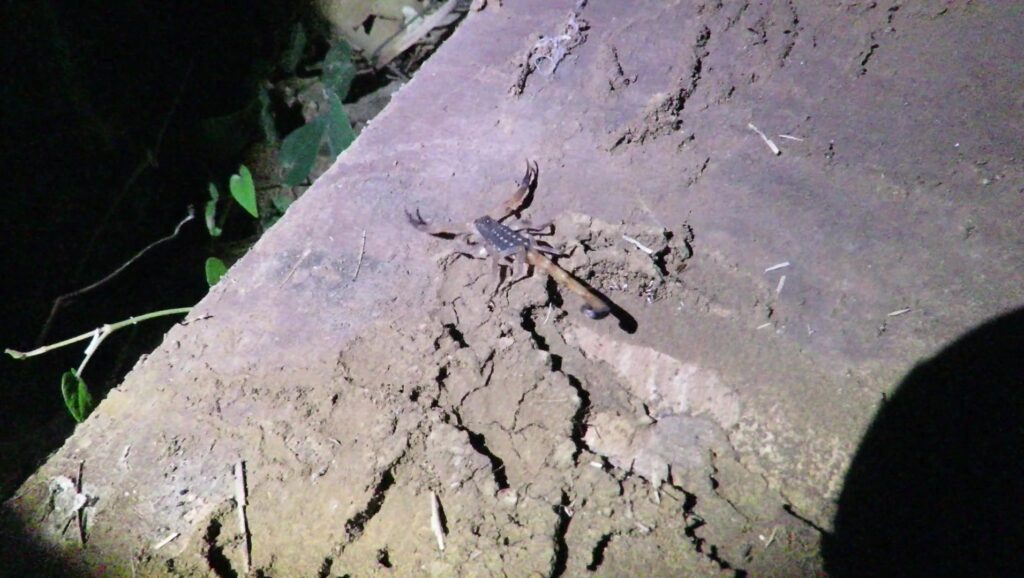
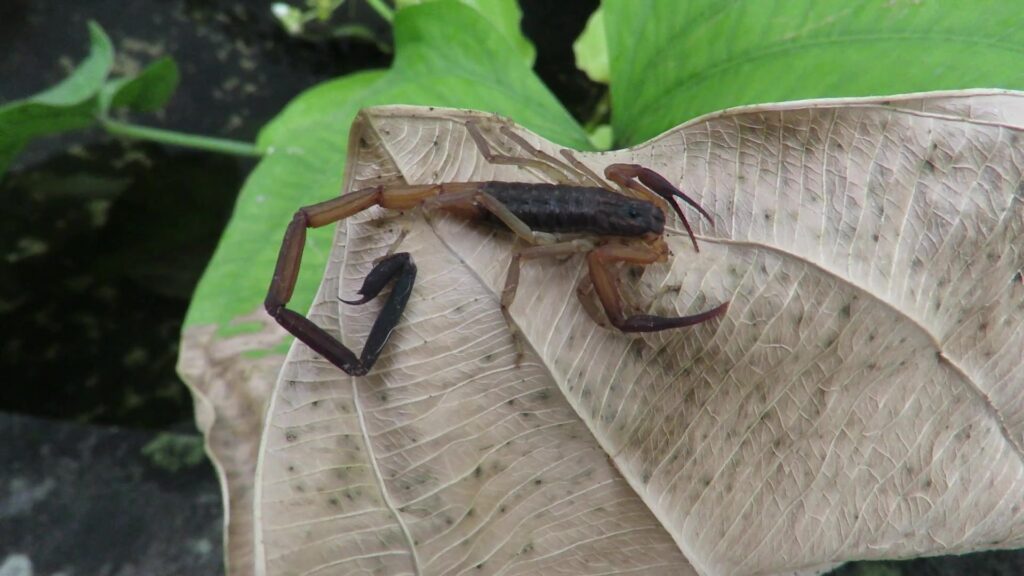
Buthida is a major taxonomic grouping of scorpions within the class Arachnida and order Scorpiones. It is primarily associated with the family Buthidae, the largest and one of the most widely distributed scorpion families. Members of this group occur across tropical, subtropical, and warm temperate regions of the world, inhabiting deserts, savannas, grasslands, forests, rocky landscapes, and human-modified environments. Many are recognized by their relatively slender pedipalps, elongated tails, and potent venom, although body shape and defensive adaptations vary considerably among species. The precise taxonomic rank and boundaries of Buthida differ among classification systems, so the name should be interpreted according to the framework being followed.
Scorpions associated with Buthida display a wide range of body sizes, colours, and physical forms. Their bodies are divided into the prosoma, which bears the eyes, mouthparts, and walking legs, and the opisthosoma, which includes the broad mesosoma and the narrow, segmented metasoma commonly called the tail. The metasoma terminates in a telson containing a venom gland and a sharp aculeus, or sting. Colouration may range from pale yellow and sandy brown to reddish brown and black, often reflecting camouflage against the substrate. Many desert-dwelling species have pale bodies that blend with sand and rock, while forest species may be darker.
The pedipalps, which terminate in pincers called chelae, are important structures for capturing prey and defending against threats. In many buthids, the pincers are comparatively slender, while the metasoma is relatively long and flexible. These features differ among genera and are not universal diagnostic characteristics of every species. Scorpions also possess sensory hairs and specialized structures that detect vibrations and air movement, helping them locate prey in darkness or concealed habitats. Their legs are adapted for walking over uneven surfaces, and their flattened bodies enable many species to shelter beneath stones, bark, logs, or other objects.
The distribution of Buthida-associated scorpions is extensive, with representatives occurring in Africa, Asia, Europe, the Americas, and other warm regions. Many species are especially diverse in arid and semiarid environments, where they occupy deserts, dry scrublands, and rocky slopes. Others inhabit tropical forests, savannas, grasslands, and agricultural landscapes. Some species live beneath stones or within natural crevices, while others dig burrows in soil or shelter beneath fallen vegetation. Certain species are also encountered around buildings, walls, and stored materials, where suitable hiding places and insect prey may be abundant. Their geographic ranges depend on climate, soil type, habitat structure, and evolutionary history.
Members of this group are predominantly nocturnal predators. They feed mainly on insects and other small arthropods, including beetles, crickets, cockroaches, spiders, and centipedes. Some larger species can capture small vertebrates under suitable circumstances. Scorpions typically detect prey through vibrations and sensory hairs before seizing it with their pedipalps. Depending on the prey’s size and resistance, they may use their pincers alone or deliver a sting to subdue it. Digestive enzymes are released onto the prey’s tissues, allowing the scorpion to consume liquefied nutrients through its mouthparts. This feeding strategy enables them to survive in environments where food may be unpredictable or seasonally scarce.
Venom is a prominent feature of many scorpions associated with Buthida, especially within Buthidae. The venom is a complex mixture of peptides, proteins, and other compounds that affect the nervous systems or tissues of prey. It serves primarily to immobilize prey and can also provide defence against predators. Venom composition and potency vary greatly among species, and the medical significance of a sting cannot be inferred from appearance alone. Some species possess venom capable of causing severe systemic effects in humans, particularly in children and other vulnerable individuals. Scorpions should therefore not be handled casually, and suspected serious envenomation requires prompt medical assessment.
Scorpions detect their surroundings using a combination of sensory structures. Their compound-like median and lateral eyes provide limited visual information, while sensory hairs and specialized organs on the legs and body detect ground vibrations, chemical cues, and air movement. A particularly important structure is the pectine, a pair of comb-like sensory organs on the underside of the body. Pectines help scorpions investigate the substrate and may contribute to locating mates, prey, or suitable shelter. These sensory adaptations are especially valuable for animals that hunt mainly at night and often remain concealed during daylight.
Reproduction in scorpions is distinctive among arachnids. Males commonly perform a courtship sequence in which they grasp the female’s pedipalps and guide her across the substrate while searching for a suitable location to deposit a spermatophore. The female then takes up the sperm packet, allowing fertilization to occur internally. Unlike most insects, scorpions generally give birth to live young rather than laying eggs externally. The newborn scorpions climb onto their mother’s back and remain there until their first moult, after which they gradually disperse. The number of offspring, duration of development, and frequency of reproduction vary among species and are influenced by environmental conditions and food availability.
Ecologically, these scorpions act as predators of small invertebrates and contribute to the regulation of arthropod populations. They are also prey for animals such as owls, reptiles, amphibians, small mammals, and larger arthropods. Their burrowing and sheltering behaviour can influence local soil structure and create small refuges used by other organisms. In dry ecosystems, scorpions are important components of nocturnal food webs, where their activity links insect populations with larger predators. Their abundance and activity are influenced by temperature, humidity, rainfall, prey availability, and the presence of suitable shelters.
Taxonomic classification within Scorpiones has changed as researchers have incorporated anatomical and molecular evidence into studies of evolutionary relationships. The family Buthidae contains numerous genera and species, and many classifications recognize it as a distinct major lineage of scorpions. However, Buthida is not used at the same rank or with the same boundaries in every modern taxonomic framework. Identification of individual taxa often depends on characteristics such as the shape of the pedipalps, metasomal segments, pectines, sensory structures, and venom apparatus, together with genetic evidence where available.
Overall, Buthida represents an important grouping in the diversity of scorpions, encompassing animals adapted to a wide range of terrestrial environments. Their sensory systems, predatory behaviour, venom, and reproductive strategies illustrate the specialized biology of arachnids that have persisted in ecosystems for millions of years. Although some members can pose a medical risk to humans, scorpions also play valuable ecological roles as predators and prey. Accurate taxonomic identification and understanding of species-specific biology are essential for studying their diversity, conservation, and interactions with people.