

Superfamily Buprestoidea
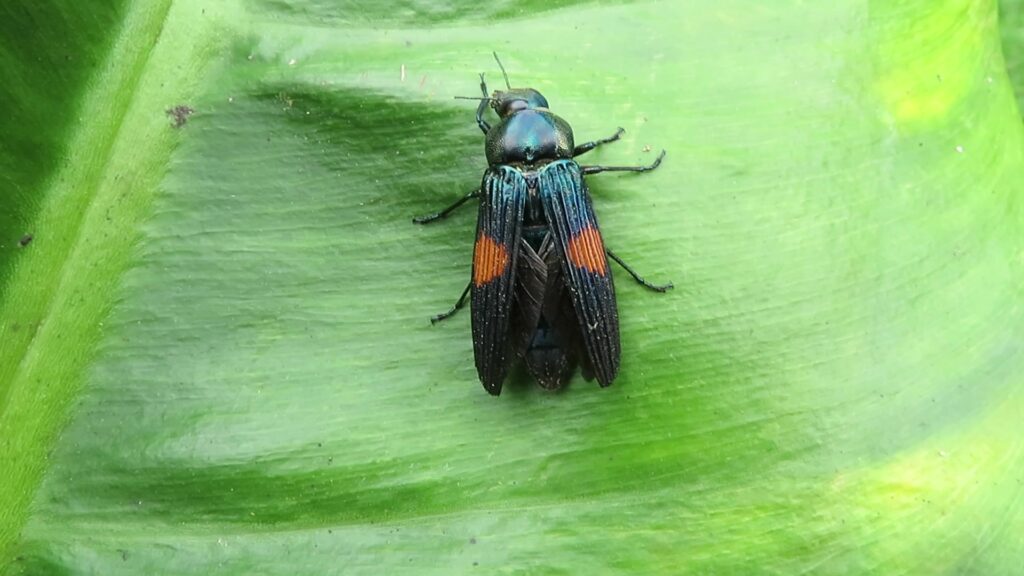
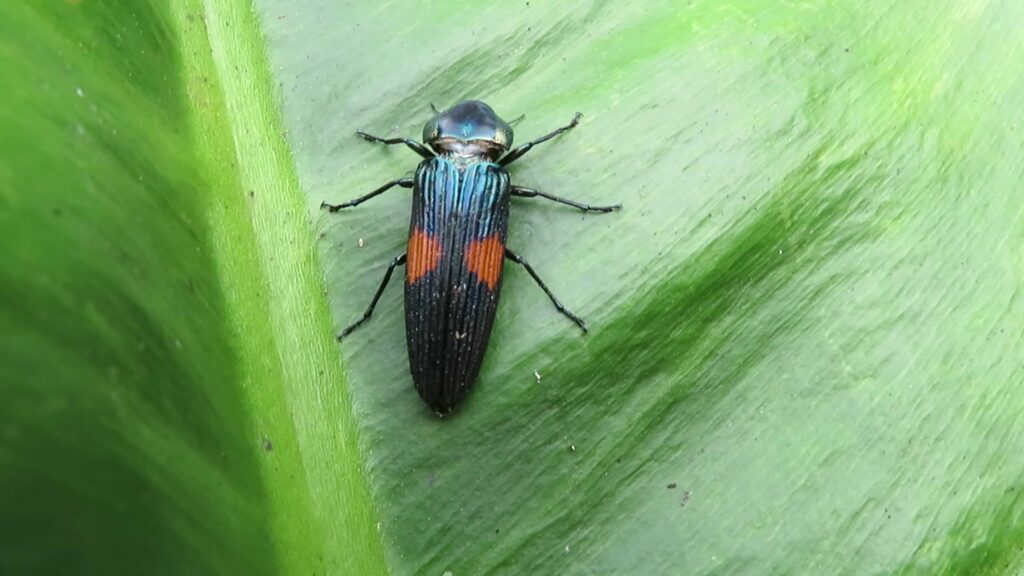
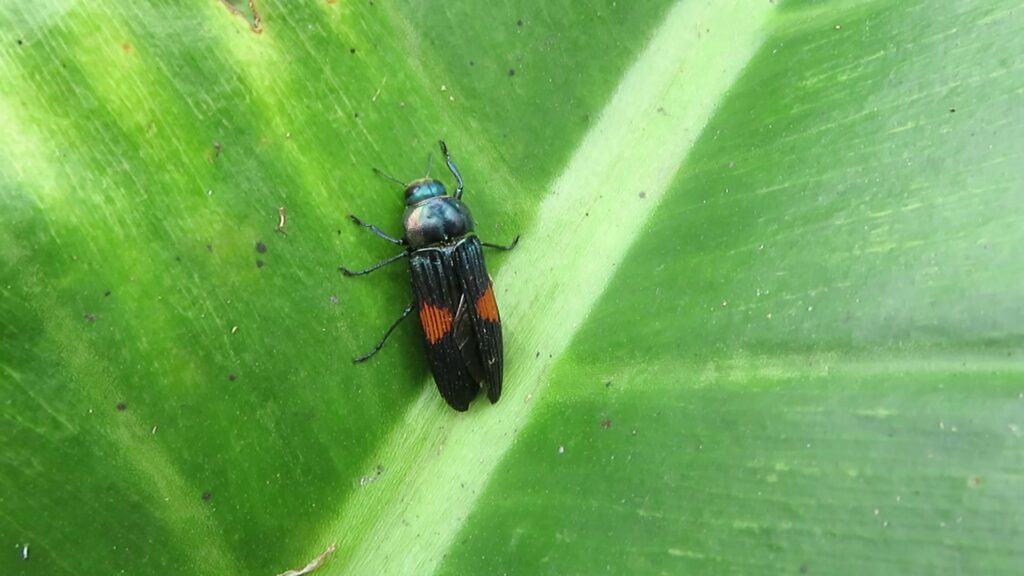
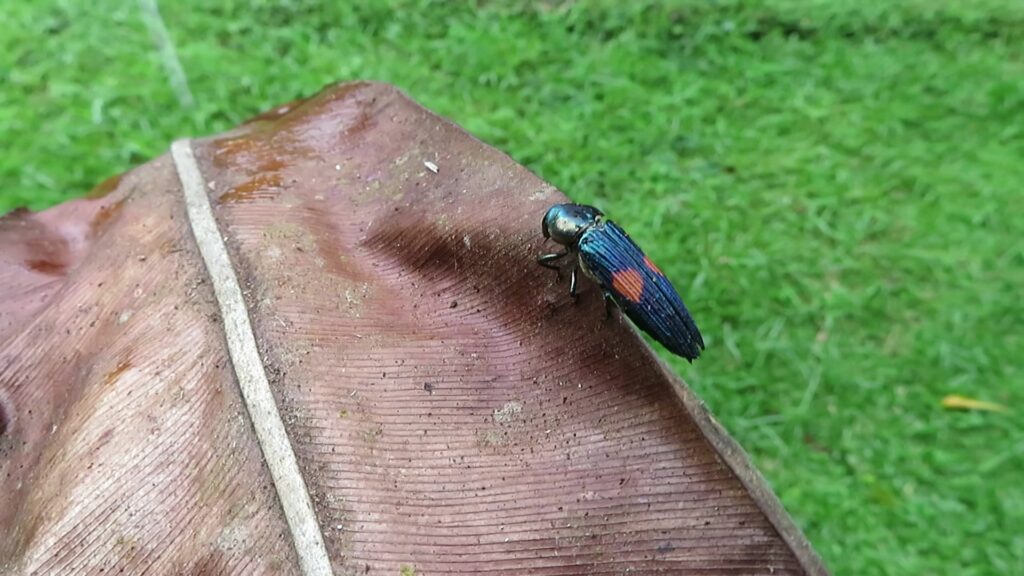
The superfamily Buprestoidea is a group of beetles in the order Coleoptera, best known for its jewel beetles and metallic wood-boring beetles. Its most prominent family is Buprestidae, which includes thousands of species renowned for their brilliant coloration, hard bodies, and larvae that develop within woody plant tissues. Buprestoidea occurs across nearly every major terrestrial region, from tropical rainforests and dry woodlands to temperate forests, grasslands, and agricultural landscapes. Many species are associated with trees and shrubs, while others inhabit herbaceous plants or specialized environments. Their ecological roles include contributing to the decomposition of dead wood, influencing plant populations, and serving as prey for numerous other animals.
Members of Buprestoidea are generally recognized by their compact, elongated, and often strongly convex bodies. Many species have a bullet-shaped outline, with a relatively broad thorax and a body that tapers toward the rear. Their hardened forewings, known as elytra, protect the delicate hindwings and abdomen. In jewel beetles, the external surface may display brilliant metallic green, blue, copper, bronze, gold, or purple coloration. These colors often arise from microscopic structural features that reflect and scatter light rather than from pigments alone. Other species are dull brown or black, especially those associated with dry habitats, concealed lifestyles, or particular host plants.
The superfamily is dominated by Buprestidae, commonly called jewel beetles or metallic wood-boring beetles. Its broader classification has varied among taxonomic authorities, and the limits and relationships of some included groups continue to be refined. Buprestidae contains a remarkable diversity of forms, from tiny species only a few millimeters long to large, robust beetles several centimeters in length. Other lineages historically or currently associated with Buprestoidea are much less diverse. Classification relies on a combination of adult anatomy, larval characteristics, and increasingly, molecular evidence. These features help researchers investigate the evolutionary relationships among beetles that share adaptations for feeding and developing in plant tissues.
Buprestoidea has a worldwide distribution, with especially high diversity in warm regions. Tropical forests support many brightly colored species associated with a broad range of trees, shrubs, and woody vines. Temperate regions also contain numerous species, including beetles whose larvae develop in dead branches, recently felled timber, or stressed trees. Some species are restricted to particular host plants or small geographical areas, while others occupy extensive ranges. Their distribution is influenced by host-plant availability, temperature, moisture, and the condition of the surrounding vegetation.
The life cycle of many buprestoids is closely connected to woody plants. Females commonly lay eggs in bark crevices, beneath bark scales, or on suitable plant surfaces. After hatching, the larvae bore into the bark, cambium, sapwood, or other plant tissues, depending on the species. Buprestid larvae are often called flatheaded borers because the front portion of the body is enlarged and flattened. Their bodies are generally pale and elongated, with reduced legs or no obvious functional legs. As they feed, the larvae create tunnels that may be winding, flattened, or irregular. Larval development can last from months to several years, particularly in species developing in large branches, trunks, or wood with limited nutritional value.
Adult jewel beetles are often active during warm, sunny weather. Many are attracted to exposed branches, tree trunks, foliage, flowers, or recently damaged vegetation. Some species feed on leaves, while others consume pollen, nectar, or plant surfaces; adult feeding habits vary considerably across the group. Their hardened bodies and relatively compact shape provide protection, and some species are difficult to detect because their coloration blends with bark or foliage. Metallic species may appear conspicuous when viewed directly but can be remarkably well camouflaged against reflective leaves, sunlit bark, or patches of vegetation.
Plant associations are central to the biology of Buprestoidea. Many larvae specialize on particular tree genera or plant families, while others can develop in several related host plants. Some species preferentially attack stressed, injured, dying, or recently dead trees, taking advantage of tissues that are easier to colonize. Others can infest healthy plants and become serious pests when environmental conditions favor their reproduction or when host trees are planted extensively in managed landscapes. The exact relationship between beetle and host depends on species, plant physiology, local climate, and the availability of suitable breeding material.
The superfamily includes species of considerable ecological and economic importance. Larvae that develop in dead or dying wood contribute to the breakdown of woody material and help recycle nutrients within forest ecosystems. Their tunnels create spaces that can later be used by fungi and other organisms, increasing the structural complexity of decomposing wood. At the same time, certain species damage living trees, timber, fruit trees, and ornamental plants. Heavy infestations can disrupt the movement of water and nutrients through plant tissues, weaken branches, and sometimes kill trees. The emerald ash borer, Agrilus planipennis, is a prominent example of a buprestid beetle that has caused extensive ash-tree mortality in areas where it has become invasive.
Buprestoidea species are also part of terrestrial food webs. Adult beetles and larvae are eaten by birds, reptiles, predatory insects, spiders, and small mammals. Their concealed larval stages can make them difficult for predators to reach, but woodpeckers and other animals capable of extracting larvae from bark or wood may exploit them. Some parasitoid wasps and flies specialize in attacking wood-boring beetle larvae. These relationships help regulate beetle populations and connect the beetles to wider ecological communities involving trees, decomposers, predators, and parasitoids.
Reproduction and population dynamics vary widely across the superfamily. Many species reproduce during specific seasonal periods when temperatures are suitable and host plants provide favorable conditions. Adults may emerge from wood in response to changes in temperature or moisture, and mating commonly occurs on or near host plants. Females select egg-laying sites according to characteristics such as bark texture, plant condition, and exposure. The success of each generation depends on the survival of eggs and larvae within plant tissues, where conditions can be strongly influenced by drought, tree health, fungi, and natural enemies.
Conservation concerns affect some Buprestoidea species, particularly those dependent on old-growth forests, rare host plants, or specialized deadwood habitats. Forest clearance, the removal of dead trees, and the simplification of woodland structure can eliminate breeding sites. Conversely, invasive species such as the emerald ash borer can threaten native trees and alter forest composition. International trade in untreated timber and wood packaging can transport wood-boring beetles beyond their native ranges. Monitoring, quarantine measures, responsible movement of firewood, and the preservation of diverse forest habitats are important for reducing these risks. Management should distinguish between species that contribute to natural decomposition and those that pose significant threats to living plants.
Overall, Buprestoidea represents an ecologically important and visually diverse lineage of beetles, especially notable for the jewel beetles of the family Buprestidae. Their life cycles connect them closely to trees and woody vegetation, while their varied feeding habits place them at the intersection of plant ecology, decomposition, and forest health. Although some species can cause serious economic damage, many are ordinary components of natural ecosystems that help process woody material and sustain food webs. Understanding their diversity, host relationships, and ecological functions is essential for both forest conservation and the management of wood-boring pests.