

Jewel Beetles (Family Buprestidae)
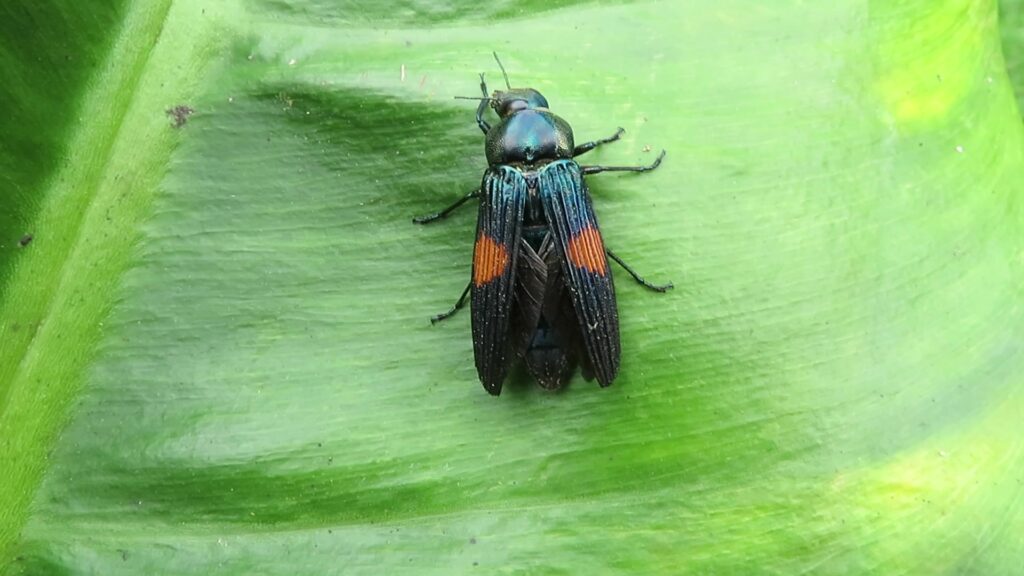
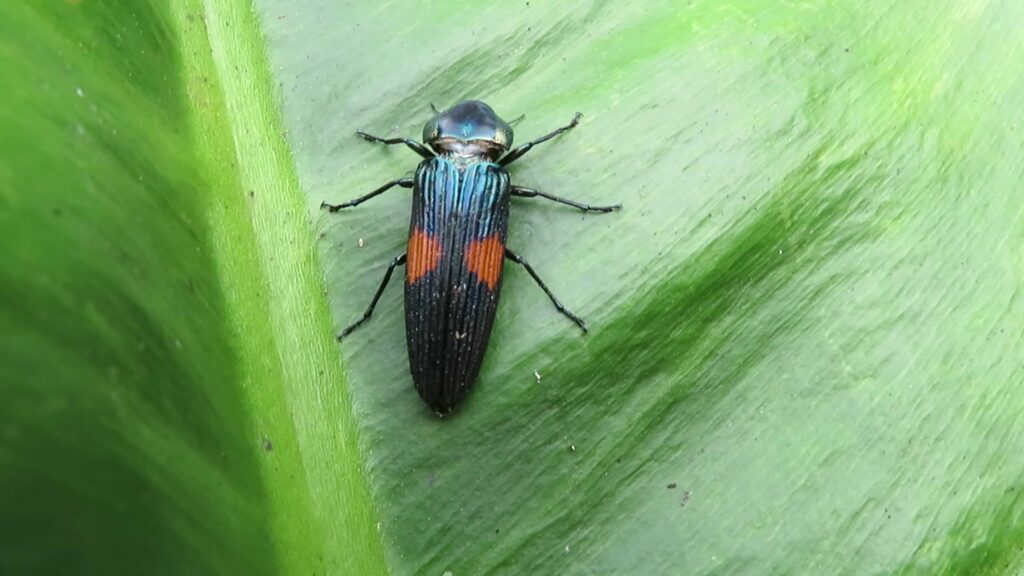
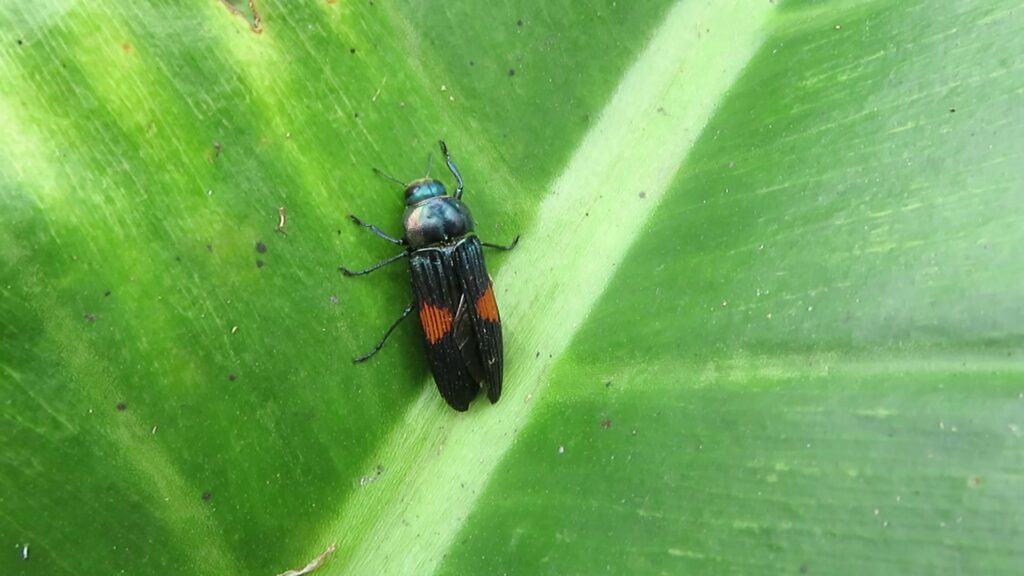
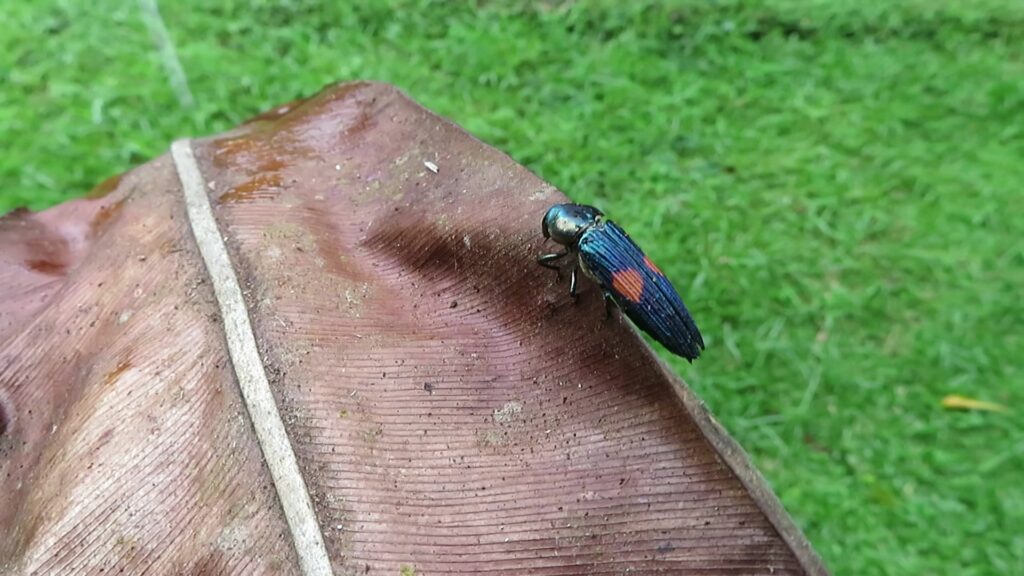
The family Buprestidae is a large and diverse family of beetles in the order Coleoptera, commonly known as jewel beetles, metallic wood-boring beetles, or flatheaded borers. These insects are famous for their brilliant metallic colors, hard protective bodies, and larvae that develop within the tissues of trees, shrubs, and other plants. Buprestidae contains thousands of described species distributed across nearly every major terrestrial region, with particularly high diversity in tropical and subtropical environments. Members of the family occupy forests, woodlands, grasslands, deserts, orchards, and agricultural landscapes, where they play important roles in plant-insect interactions and the decomposition of woody material.
Adult jewel beetles typically have compact, elongated, and strongly convex bodies that often taper toward the rear. Their hardened forewings, known as elytra, cover the hindwings and protect the abdomen. Many species display striking shades of metallic green, blue, bronze, copper, gold, violet, or black, sometimes arranged in intricate patterns of stripes, spots, ridges, and textured surfaces. These brilliant colors frequently result from structural coloration, in which microscopic layers and surface structures reflect light in particular ways. Other species have dull brown, gray, or black coloration that helps them blend into bark, dry vegetation, or their surroundings.
Body size varies considerably across Buprestidae. Some species are only a few millimeters long, while larger tropical species may reach several centimeters. Their heads are generally partly tucked beneath the pronotum, the hardened plate behind the head, and their antennae are usually short and serrated or toothed. The legs are relatively sturdy, allowing adults to grip bark, leaves, and branches. Many species are strong fliers despite their rigid body structure, while others spend much of their time resting on host plants. Their hardened exoskeleton offers protection against physical injury and may help reduce water loss in species living in hot or dry environments.
The family has a worldwide distribution, occurring on every continent except Antarctica. Tropical regions, particularly those with extensive forests and diverse woody vegetation, support a remarkable variety of jewel beetles. Many species are associated with specific trees or shrubs, while others can develop in several related host plants. Some inhabit temperate woodlands, where adults appear during warm months and larvae develop beneath the bark of dying trees or within branches. Desert and dryland species may be associated with drought-tolerant shrubs and trees, and certain species are adapted to plants growing in exposed, sunlit environments.
The larval stage is one of the most distinctive features of Buprestidae. Many larvae are called flatheaded borers because the front portion of the body is broad and flattened, while the abdomen is elongated and relatively narrow. They are generally pale, soft-bodied grubs with reduced legs or no obvious functional legs. After hatching, larvae bore into bark, cambium, sapwood, or other plant tissues, depending on the species. Their tunnels may form winding galleries beneath the bark or extend deeper into the wood. Larval development can last from several months to multiple years, particularly in species whose larvae grow within large trunks or branches.
Adult jewel beetles feed on a variety of plant materials, although feeding habits differ among species. Some consume leaves, while others feed on flowers, pollen, nectar, or the surfaces of young shoots. Many adults are active during sunny weather and can be found on foliage, tree trunks, branches, or recently damaged plants. Certain species are attracted to sunlit bark or trees that have been stressed by drought, fire, disease, or physical injury. Their activity is often seasonal, with adults emerging when temperatures and host-plant conditions are favorable for feeding and reproduction.
Plant relationships are central to the biology of Buprestidae. Females generally lay eggs on or beneath bark, in crevices, or on other suitable plant surfaces. The newly hatched larvae enter the plant and feed internally, often remaining concealed until they complete development. Some species preferentially colonize dead, dying, or weakened trees, contributing to the breakdown of woody material. Others can attack apparently healthy plants and become serious pests when their populations increase. Host selection depends on factors such as bark texture, plant chemistry, moisture, tree condition, and the availability of suitable breeding sites.
The family includes several economically significant pests. The emerald ash borer (Agrilus planipennis) has caused extensive mortality of ash trees in parts of North America and has also spread into other regions outside its native range. Other species attack fruit trees, forest trees, ornamental plants, and commercially important timber species. Larval feeding can interrupt the movement of water and nutrients through the cambium and adjacent tissues, weakening branches and trunks and sometimes killing the host plant. Infestations may be difficult to detect in their early stages because larvae remain hidden beneath bark, while visible symptoms such as canopy thinning and branch dieback can appear only after substantial damage has occurred.
Despite their reputation as wood-boring pests, many Buprestidae species perform valuable ecological functions. Larvae that develop in dead or dying wood help break down woody tissues and contribute to nutrient cycling in forests. Their tunnels create openings that can be used by fungi and other organisms, while their feeding activity helps prepare wood for further decomposition. Adult beetles and larvae also serve as food for birds, reptiles, spiders, predatory insects, and small mammals. Some parasitoid wasps and flies attack their larvae, helping regulate populations naturally. These interactions make jewel beetles an integral component of woodland and forest food webs.
Reproduction and development vary across the family, but most species follow the typical beetle life cycle of egg, larva, pupa, and adult. After mating, females select suitable sites for egg deposition, often guided by the condition and characteristics of the host plant. Larvae may pass through several developmental stages while feeding within plant tissues. Once mature, they pupate in a protected chamber within the wood or beneath the bark before emerging as adults. The length of the life cycle depends on species, temperature, moisture, food quality, and host-plant condition. In some species, development may be prolonged when environmental conditions are unfavorable.
Conservation concerns affect both individual species and the habitats they occupy. Forest clearance, the removal of old trees and deadwood, and the simplification of woodland structure can reduce the availability of breeding sites for species dependent on particular host plants. Rare or geographically restricted jewel beetles may be especially vulnerable to habitat loss. At the same time, invasive buprestid species can threaten native trees and alter forest composition. International trade in timber, firewood, and untreated wood packaging can transport wood-boring beetles into new regions. Preventing accidental introductions, maintaining diverse forest habitats, and monitoring high-risk tree pests are important components of conservation and forest management.
The family Buprestidae is notable for its combination of spectacular adult coloration, specialized wood-boring larvae, and diverse ecological roles. Jewel beetles contribute to the decomposition of woody material, support food webs, and interact closely with trees and shrubs throughout their life cycles. Although some species are destructive pests of forests and cultivated plants, many are ordinary and beneficial members of natural ecosystems. Their diversity and close association with plant tissues make Buprestidae an important group for studying insect evolution, forest ecology, host specialization, and the management of tree health.