

Genus Aularches
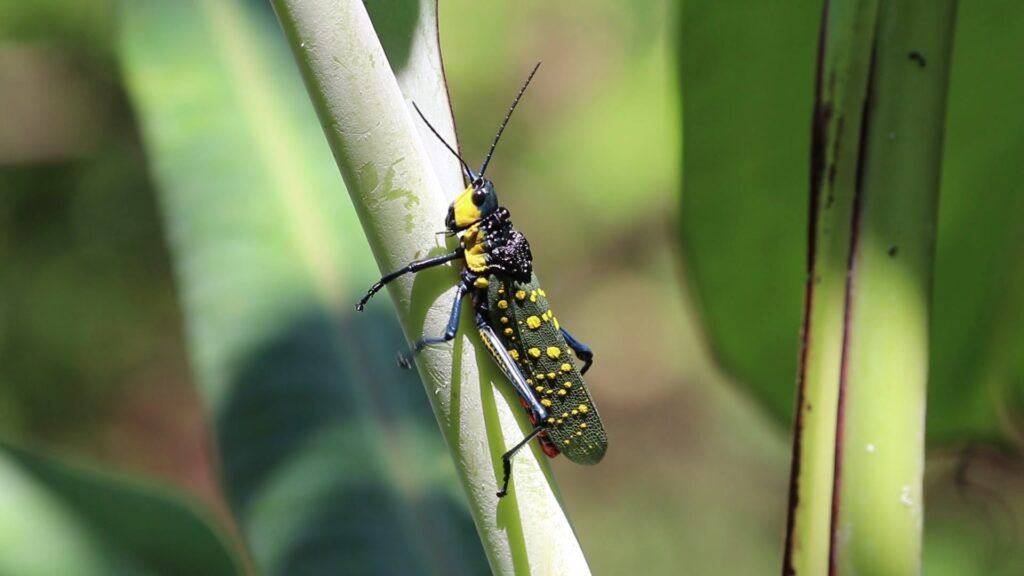
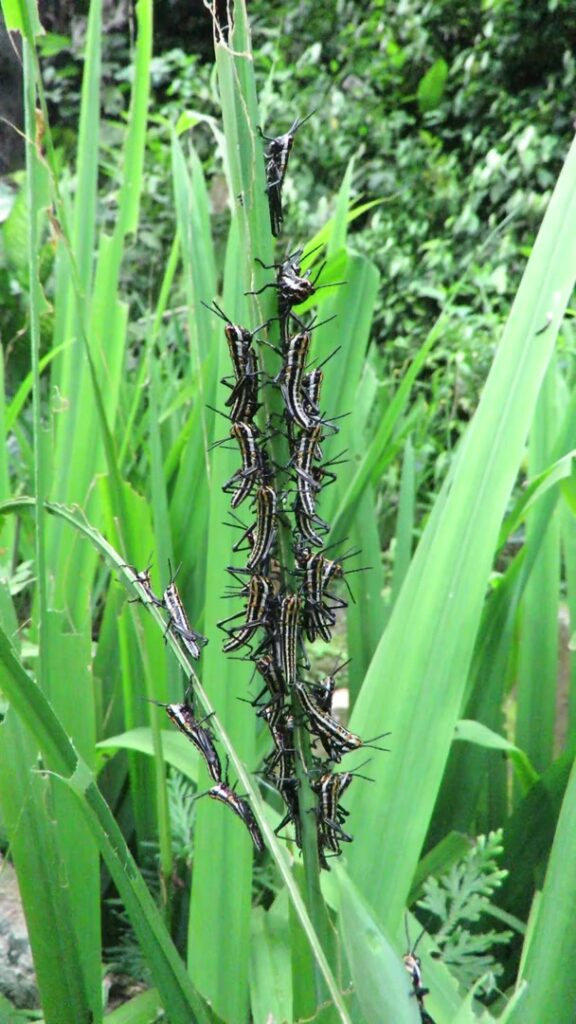
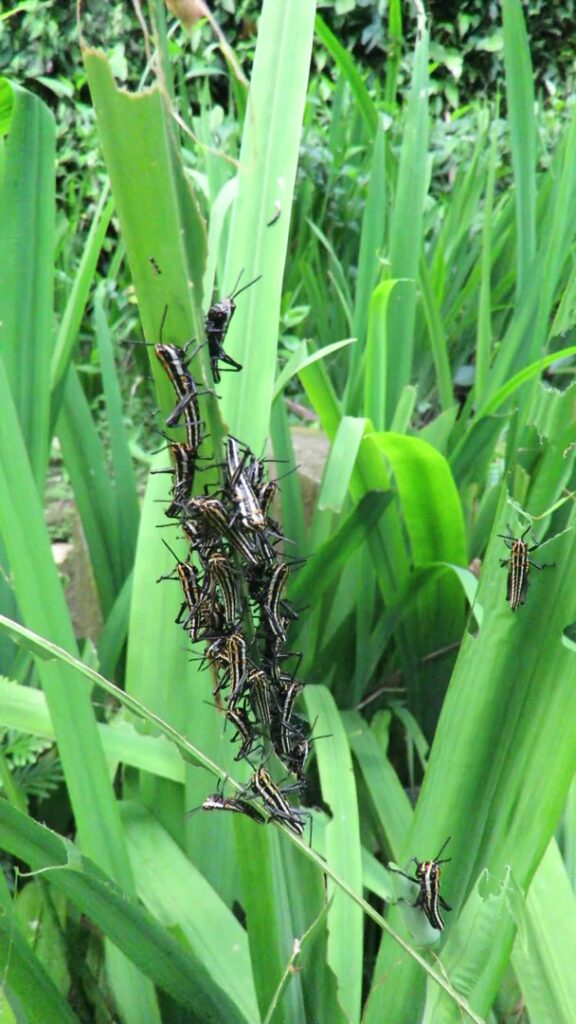
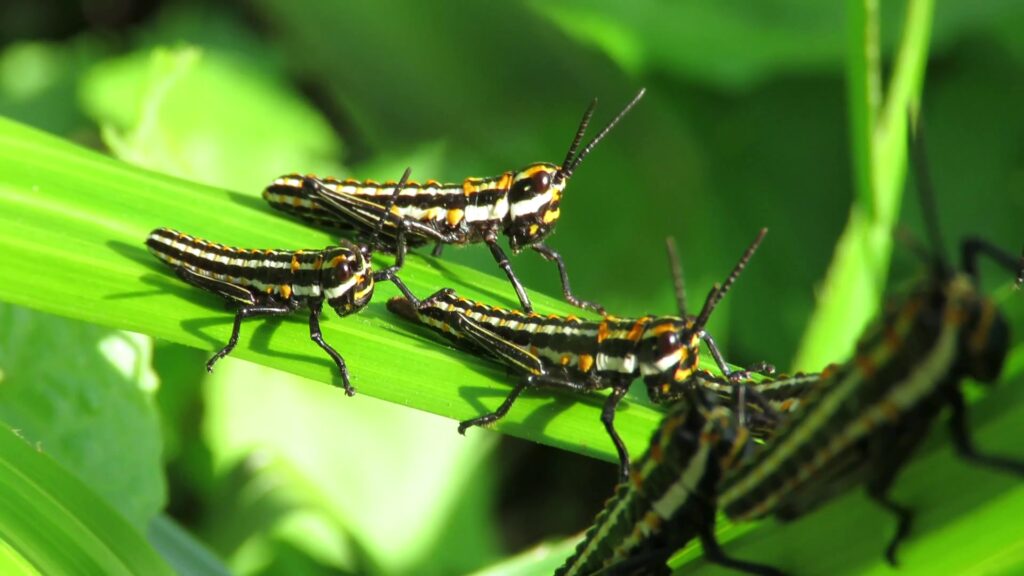
Aularches is a genus of grasshoppers belonging to the family Pyrgomorphidae within the order Orthoptera. It is best known for the painted grasshopper, Aularches miliaris, a striking species native to parts of South and Southeast Asia. Members of this genus are notable for their robust bodies, contrasting coloration, and defensive adaptations that help protect them from predators.
Aularches grasshoppers have relatively large, stout bodies, short antennae, and powerful hind legs adapted for jumping. Their exoskeleton is firm and provides protection, while their body shape enables them to move through vegetation and across the ground. The most familiar species, Aularches miliaris, displays a distinctive combination of dark coloration with bright yellow, orange, red, or bluish markings. These vivid colors make it conspicuous among grasshoppers and may serve as warning signals to potential predators.
The genus is associated primarily with tropical and subtropical habitats in South and Southeast Asia. Aularches miliaris has been recorded in countries including India and Sri Lanka, as well as parts of mainland Southeast Asia and the Malay Peninsula. It occurs in environments with abundant vegetation, including forest margins, scrubland, gardens, plantations, and agricultural areas. The availability of suitable food plants and warm, humid conditions influences its distribution and activity.
Grasshoppers of this genus are herbivorous and feed on leaves and other plant tissues. Aularches miliaris is associated with a variety of plants and may occur in gardens, cultivated areas, and natural vegetation where food is plentiful. Although its feeding can affect individual plants, it is not generally regarded as one of the most destructive agricultural grasshoppers. Its feeding habits nevertheless form part of the ecological interactions between herbivorous insects and vegetation.
One of the most remarkable characteristics of Aularches is its defensive behavior. When threatened, Aularches miliaris may produce a loud hissing or crackling sound by expelling air or using specialized structures associated with its body. It can also release an unpleasant-smelling defensive secretion that discourages predators from attacking. Its bright coloration further warns potential predators that it may be distasteful or otherwise unsuitable as prey. These defenses make the genus particularly interesting in studies of insect behavior and predator avoidance.
The life cycle follows the typical pattern of grasshoppers, consisting of egg, nymph, and adult stages. Females deposit eggs in suitable substrates, generally in soil, where the developing embryos are protected. The young hatch as nymphs that resemble smaller versions of adults but lack fully developed wings and reproductive structures. They grow through successive molts before reaching adulthood. Temperature, rainfall, humidity, and food availability influence development and reproduction.
As part of terrestrial ecosystems, Aularches grasshoppers contribute to food webs through their consumption of vegetation and their interactions with predators. Their defensive secretions and warning coloration reduce the likelihood of being eaten by some predators, but they remain part of the broader ecological community. Their presence also illustrates how insects combine structural, chemical, and behavioral adaptations to survive in tropical environments.
Although Aularches miliaris is relatively recognizable, accurate identification and understanding of the genus depend on its diagnostic morphological features and accepted taxonomy. Habitat alteration, pesticide use, and changes in vegetation can influence local populations, particularly where natural habitats are replaced by intensive land use. Preserving diverse vegetation and suitable breeding environments can help maintain the ecological communities in which these grasshoppers occur.
Overall, Aularches is a distinctive genus of Asian grasshoppers characterized by its robust body, powerful jumping legs, and remarkable defensive adaptations. Its best-known representative, Aularches miliaris, stands out for its vivid warning coloration, defensive sounds, and unpleasant secretions. These features make the genus an interesting example of the diversity and complexity of insect adaptations in tropical and subtropical ecosystems.