Bali Wildlife
Every Spices Matter


Aspidimorpha is a genus of tortoise beetles within the tribe Aspidimorphini (Subfamily Cassidinae, Family Chrysomelidae, Order Coleoptera). Members of this genus are widely distributed throughout tropical and subtropical regions of Asia, Africa, Australia, and parts of the Pacific. They are commonly found in forests, grasslands, agricultural fields, roadsides, gardens, and other habitats where their host plants occur.
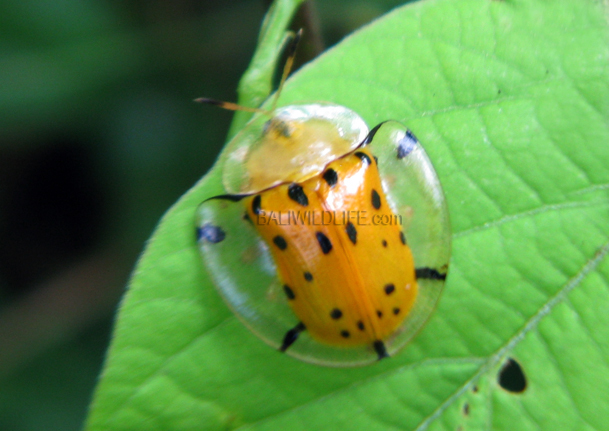
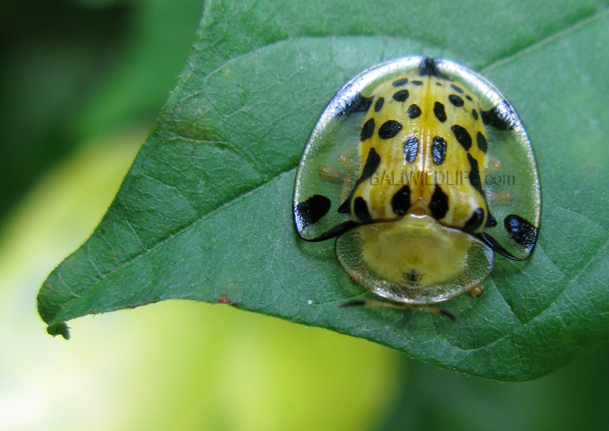
Beetles of the genus Aspidimorpha are generally small to medium-sized and are easily recognized by their broad, rounded, shield-like body. The pronotum and elytra are expanded laterally, covering much of the head and legs when viewed from above. This distinctive form gives them the appearance of miniature tortoises and provides protection against predators.
Coloration varies among species and may include shades of yellow, green, orange, brown, gold, or combinations of these colors. Many species possess transparent or translucent margins around the body, enhancing their characteristic tortoise-like appearance. Some species display spots, bands, or metallic reflections on the dorsal surface.
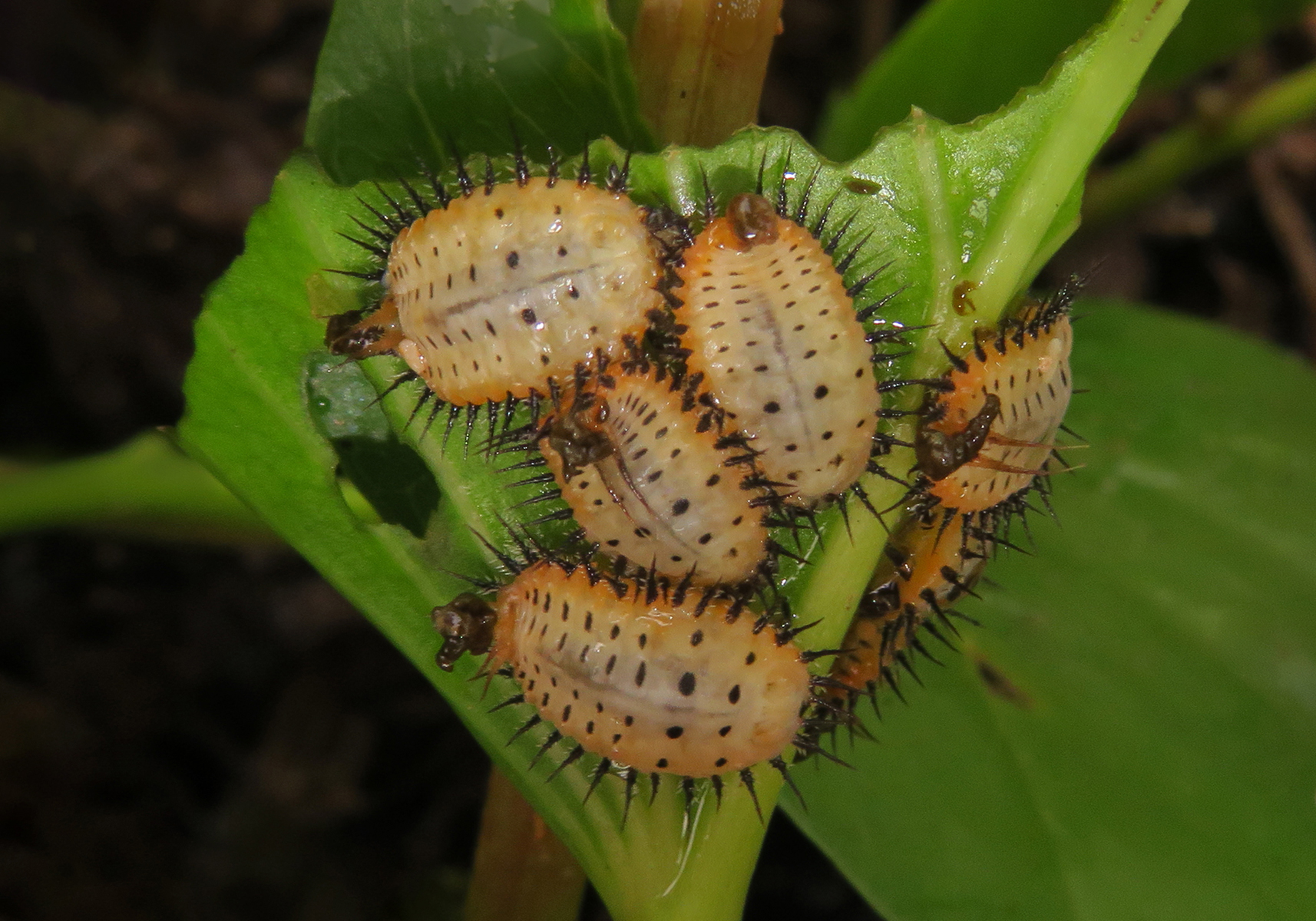
Both adults and larvae are herbivorous and feed mainly on leaves of host plants, particularly members of the family Convolvulaceae (morning glory family), although other plant groups may also be utilized. Adults feed on leaf tissue, while larvae often graze on the underside of leaves.
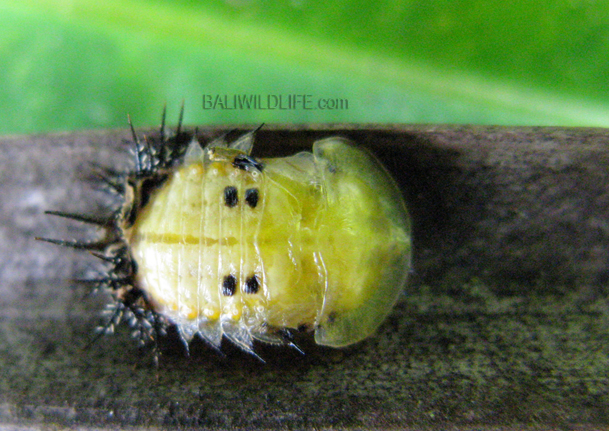
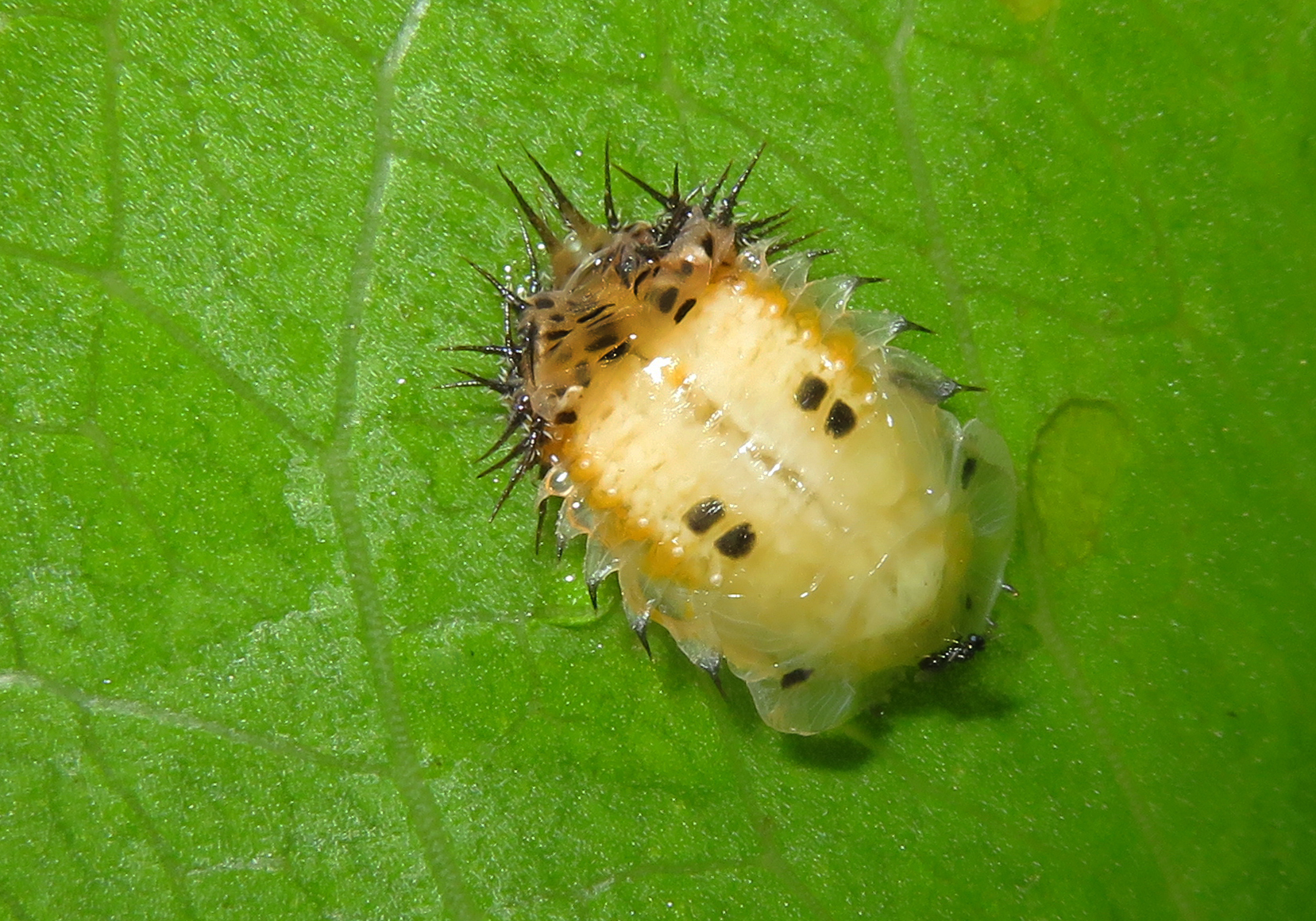
The life cycle follows complete metamorphosis and includes egg, larva, pupa, and adult stages. Larvae are flattened and typically carry a protective shield composed of shed skins and fecal material attached to a forked appendage at the end of the abdomen. This structure serves as a defense against predators and parasitoids.
The genus includes numerous species, among them Aspidimorpha miliaris, one of the most widespread and commonly encountered tortoise beetles in Asia.
Ecologically, Aspidimorpha species play an important role as herbivores in terrestrial ecosystems and contribute to plant–insect interactions. They also serve as prey for birds, reptiles, spiders, and predatory insects. Their distinctive morphology, defensive adaptations, and attractive appearance make them among the most recognizable and well-studied tortoise beetles.