Bali Wildlife
Every Spices Matter


Aspidimorpha miliaris is a species of tortoise beetle belonging to the genus Aspidimorpha (Tribe Aspidimorphini, Subfamily Cassidinae, Family Chrysomelidae, Order Coleoptera). It is widely distributed throughout South Asia, Southeast Asia, East Asia, and parts of the Pacific region. This species commonly inhabits grasslands, agricultural fields, gardens, forest edges, and disturbed habitats where suitable host plants are abundant.
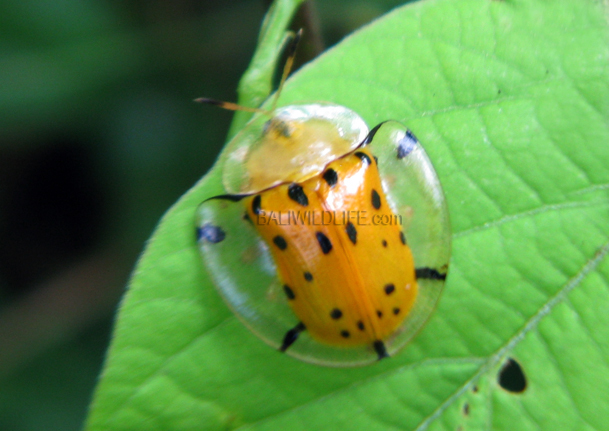
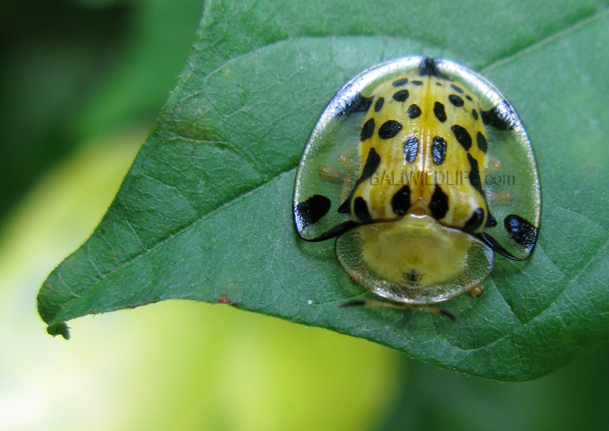
Aspidimorpha miliaris is a small to medium-sized beetle recognized by its broad, oval, shield-like body. The pronotum and elytra are expanded outward, concealing much of the head and legs when viewed from above. The body is typically yellow, orange-yellow, or pale greenish-yellow, marked with numerous small black spots across the dorsal surface. Transparent or translucent margins around the body further enhance its characteristic tortoise-like appearance.
Adults are herbivorous and feed primarily on the leaves of plants in the morning glory family (Convolvulaceae), including species of Ipomoea and related genera. Feeding activity produces characteristic holes and patches on leaves, although damage is usually not severe except in large populations.
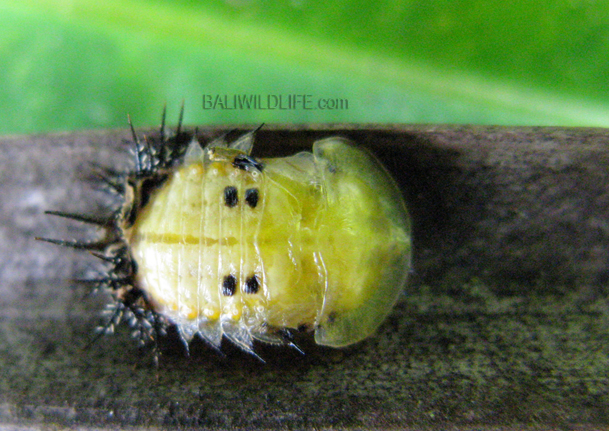
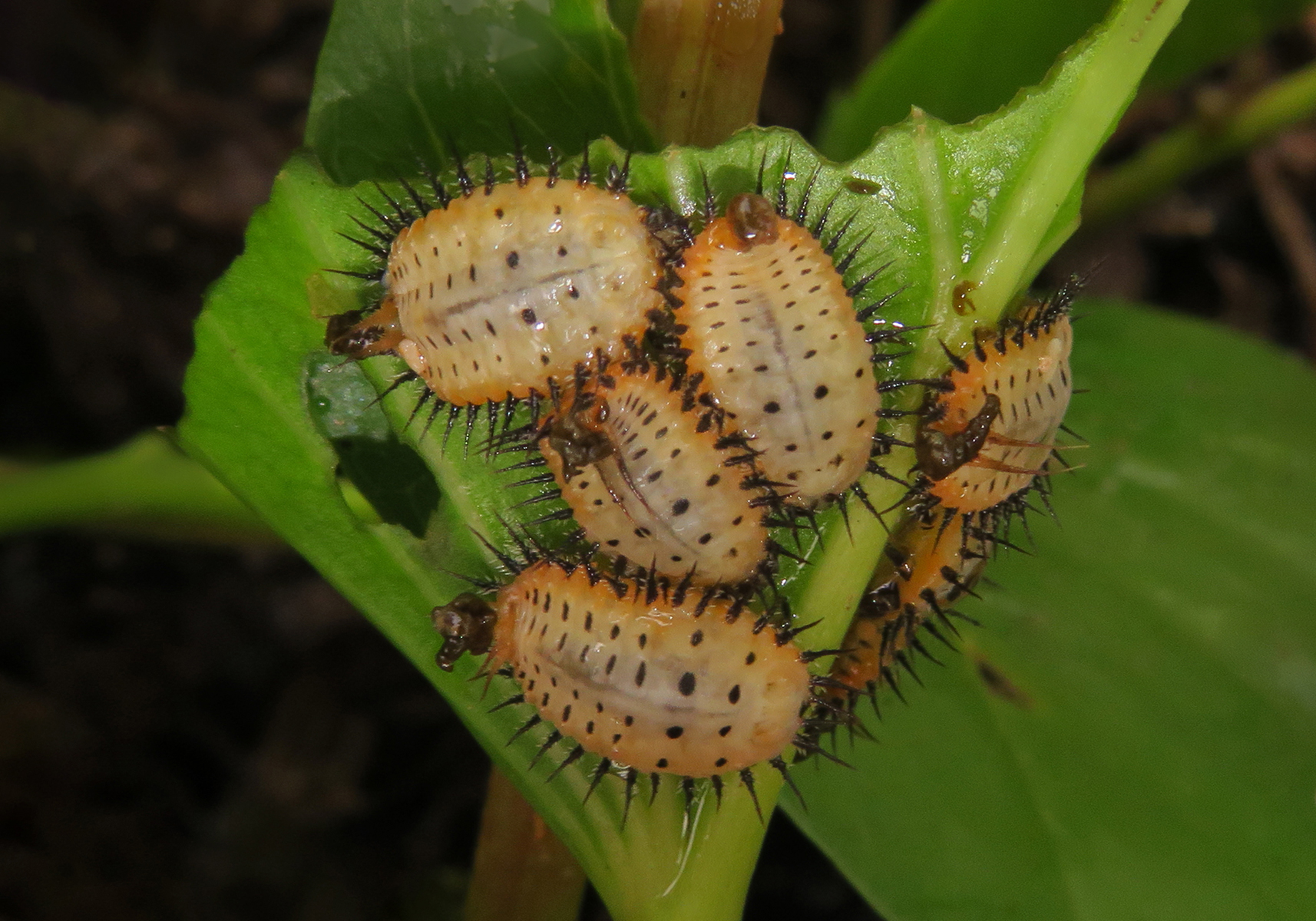
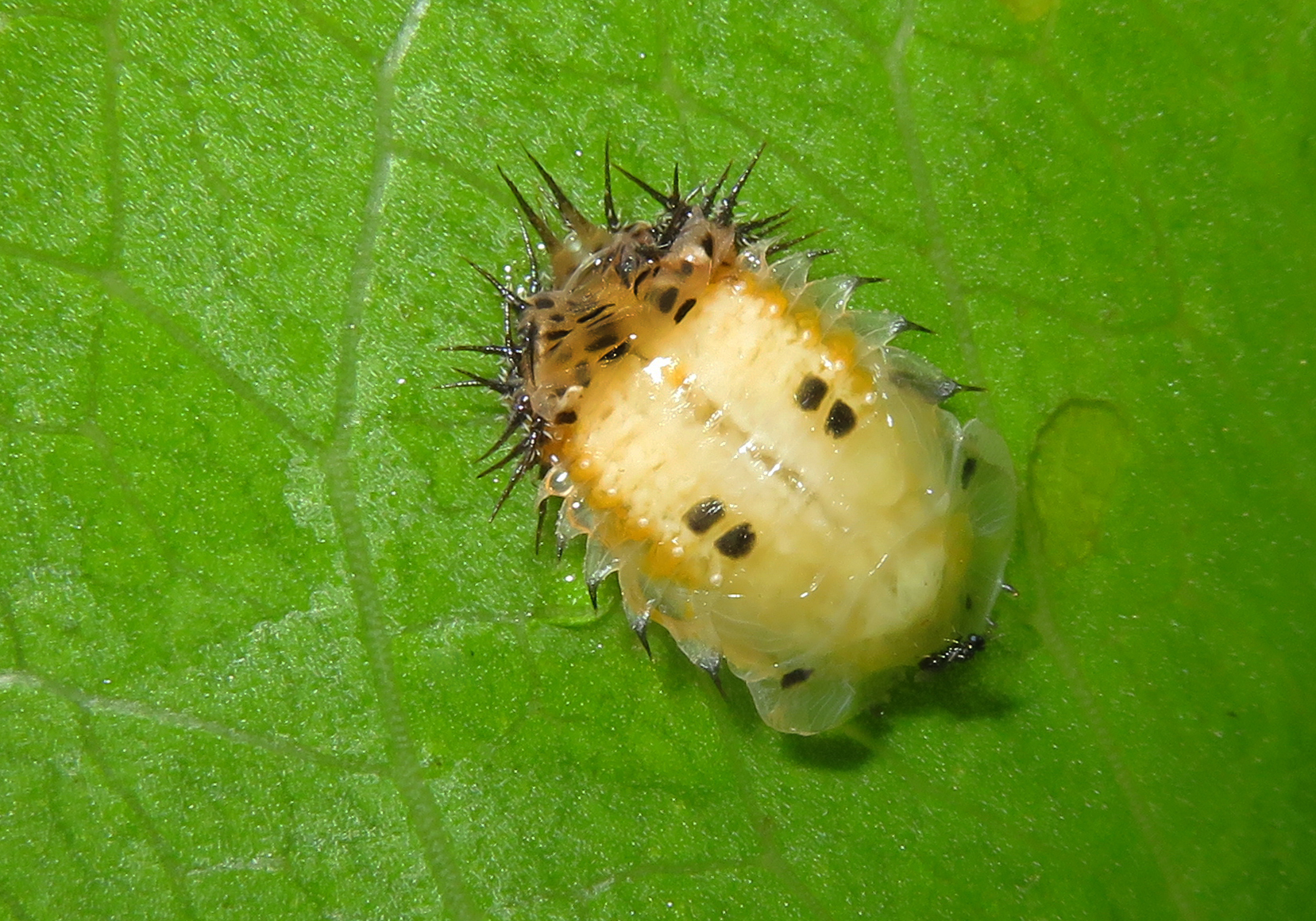
The life cycle involves complete metamorphosis with four stages: egg, larva, pupa, and adult. Females lay clusters of eggs on the underside of host plant leaves. Larvae are flattened and spiny and possess a forked appendage at the end of the abdomen that carries a protective shield made from fecal material and shed skins. This remarkable defense helps deter predators and parasitoids. Pupation occurs on the host plant, attached to the leaf surface.
Adults are generally active during the day and can often be found resting or feeding on exposed foliage. When disturbed, they may cling tightly to the leaf surface, using their flattened body and expanded margins as protection.
Ecologically, Aspidimorpha miliaris functions as a herbivore and contributes to plant–insect interactions within its habitat. It serves as prey for birds, spiders, predatory insects, and other animals, forming part of local food webs. Its distinctive spotted pattern, tortoise-like shape, and unusual larval defenses make it one of the most recognizable and frequently encountered tortoise beetles in Asia.