Bali Wildlife
Every Spices Matter


Aspidimorphini is a tribe of tortoise beetles within the subfamily Cassidinae (Family Chrysomelidae, Order Coleoptera). Members of this tribe are widely distributed throughout tropical and subtropical regions of Africa, Asia, Australia, and the Americas, with the highest diversity occurring in warm, vegetation-rich habitats such as forests, grasslands, agricultural areas, and gardens.
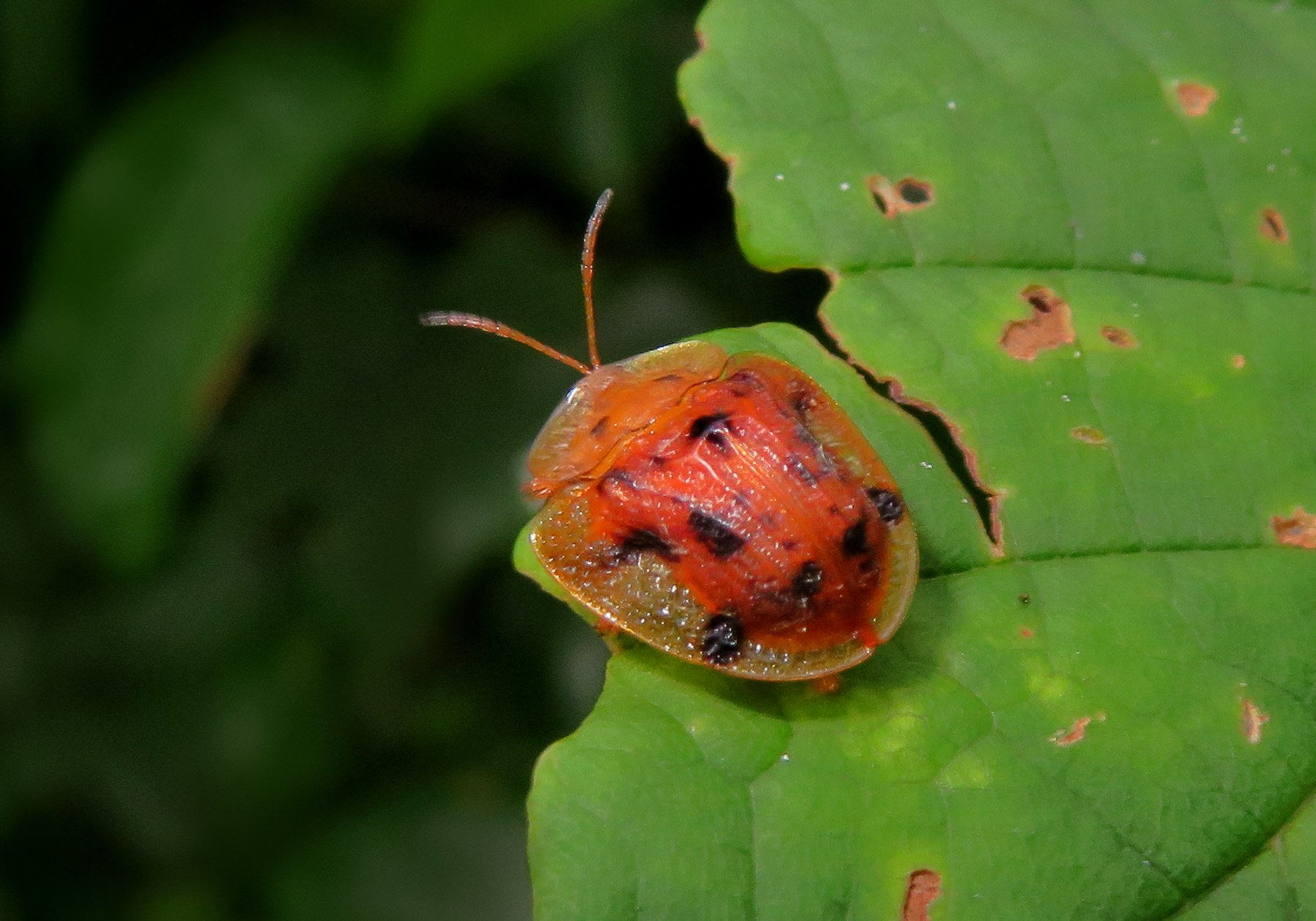
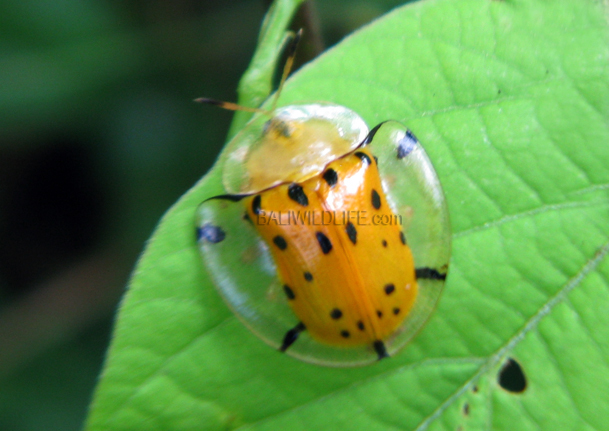
Beetles of the tribe Aspidimorphini are generally small to medium-sized and are characterized by their distinctive shield-like appearance. The body is broadly oval and flattened, with the pronotum and elytra expanded outward to partially or completely cover the head, legs, and abdomen. This unique shape gives them the appearance of miniature tortoises, leading to their common name, tortoise beetles.
Coloration varies widely among species and may include green, yellow, brown, orange, metallic gold, or patterned combinations of these colors. Some species are capable of changing appearance depending on moisture levels, age, or physiological condition. The expanded margins of the body often provide protection against predators by making it difficult to grasp or attack the beetle.
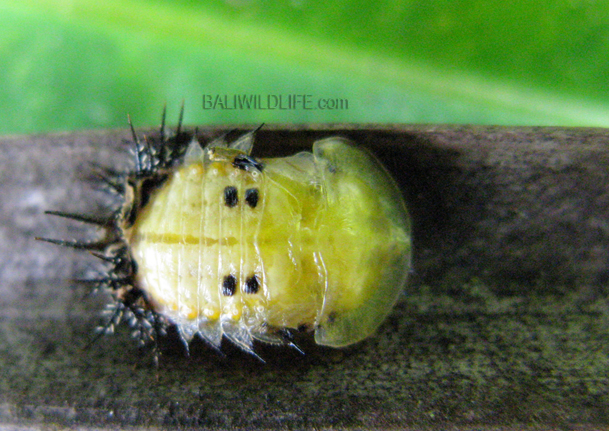
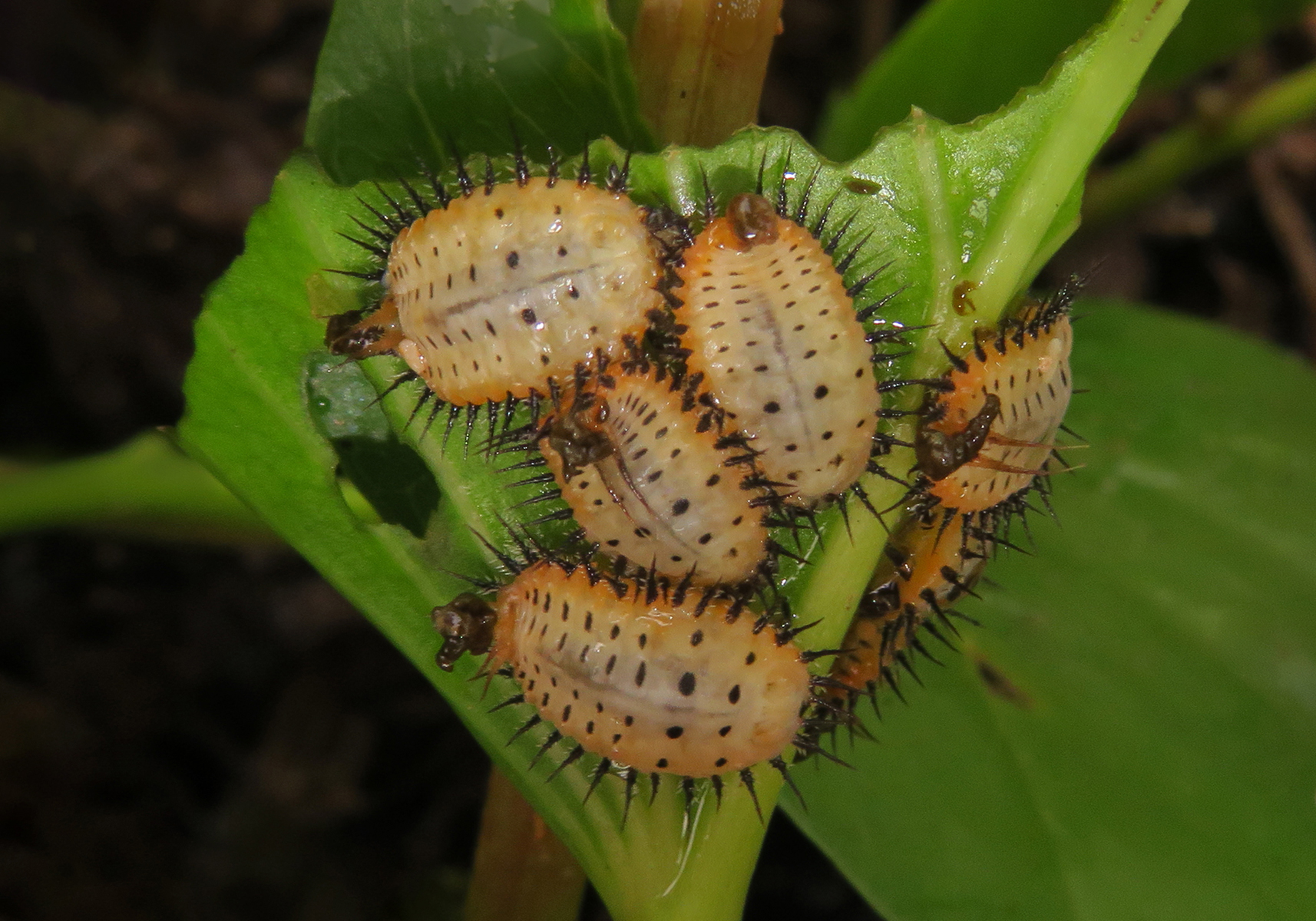
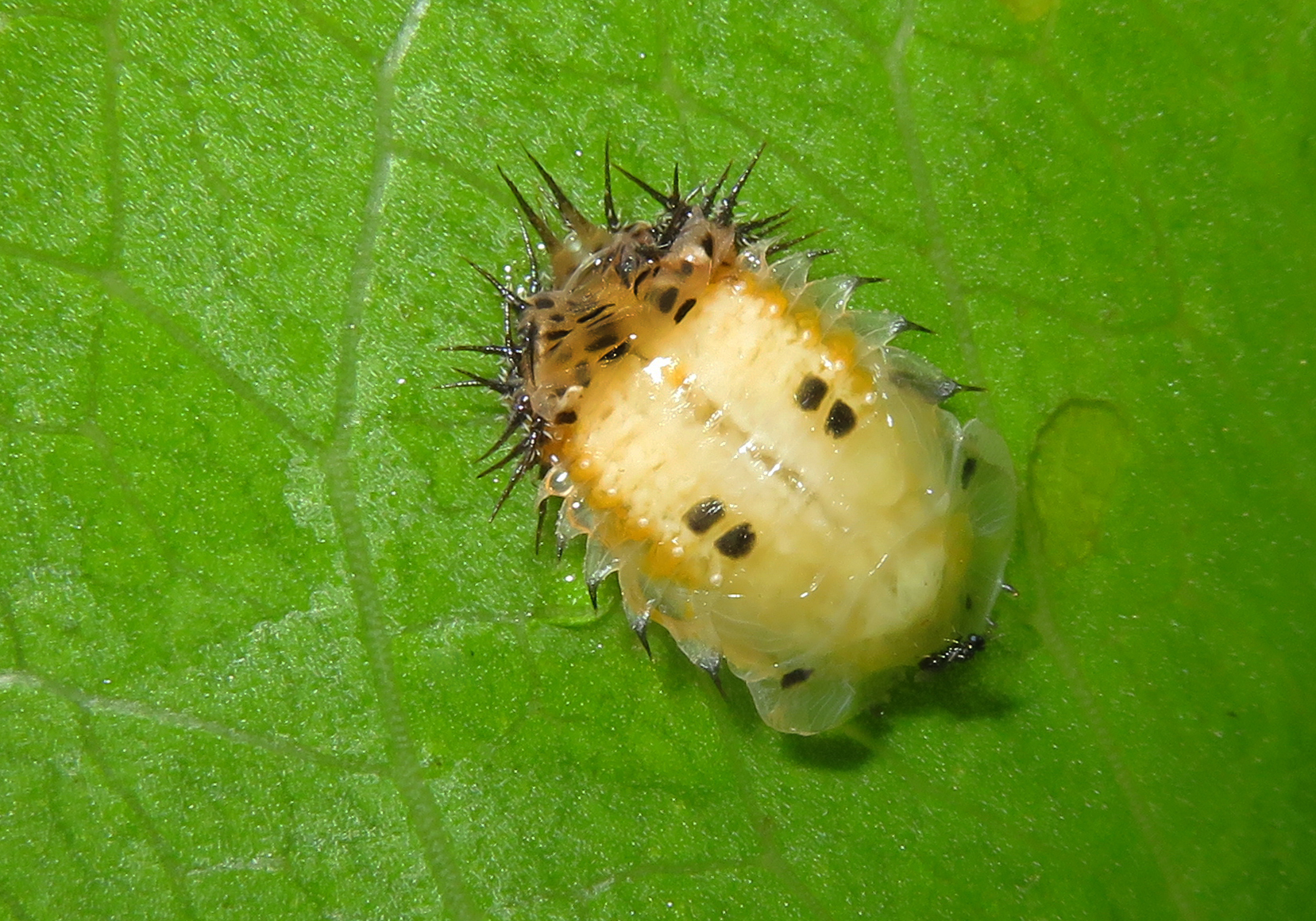
Both adults and larvae are herbivorous. They feed primarily on leaves of various flowering plants, especially members of families such as Convolvulaceae, Solanaceae, and related groups. Larvae of many species possess a characteristic forked structure at the end of the abdomen used to carry exuviae and fecal material, forming a protective “fecal shield” that helps deter predators and parasitoids.
The life cycle involves complete metamorphosis with egg, larva, pupa, and adult stages. Eggs are usually laid on host plants, where larvae feed and develop before pupating on vegetation.
The tribe includes numerous genera, such as Aspidimorpha, Laccoptera, and Selenis, representing a wide diversity of forms and ecological adaptations.
Ecologically, Aspidimorphini beetles are important herbivores that influence plant communities and contribute to ecosystem dynamics. They also serve as prey for birds, reptiles, spiders, and predatory insects. Their distinctive morphology, defensive adaptations, and often attractive coloration make them among the most recognizable members of the tortoise beetle lineage.