

Oval Saint Andrew's Cross Spider (Argiope aemula)
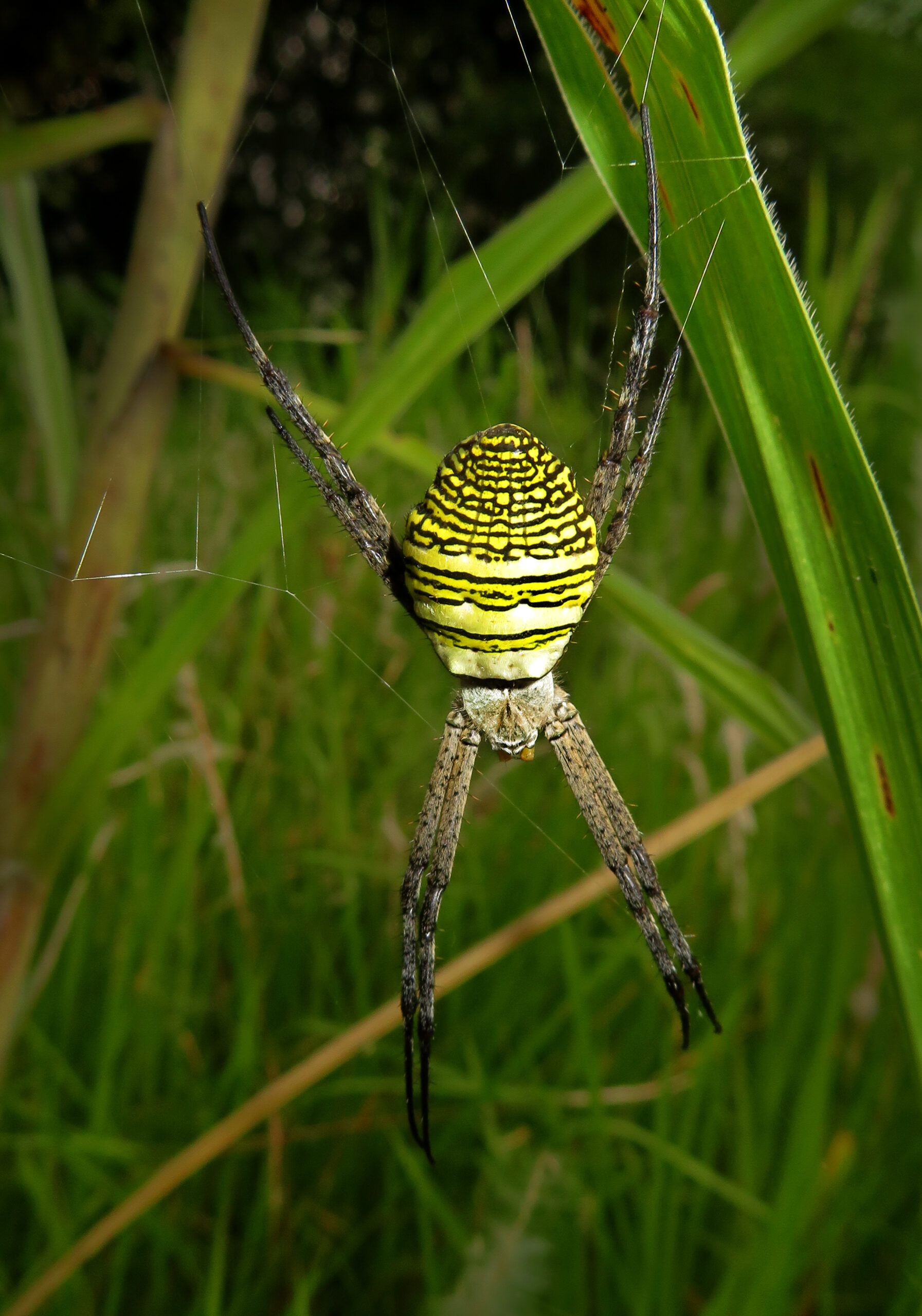
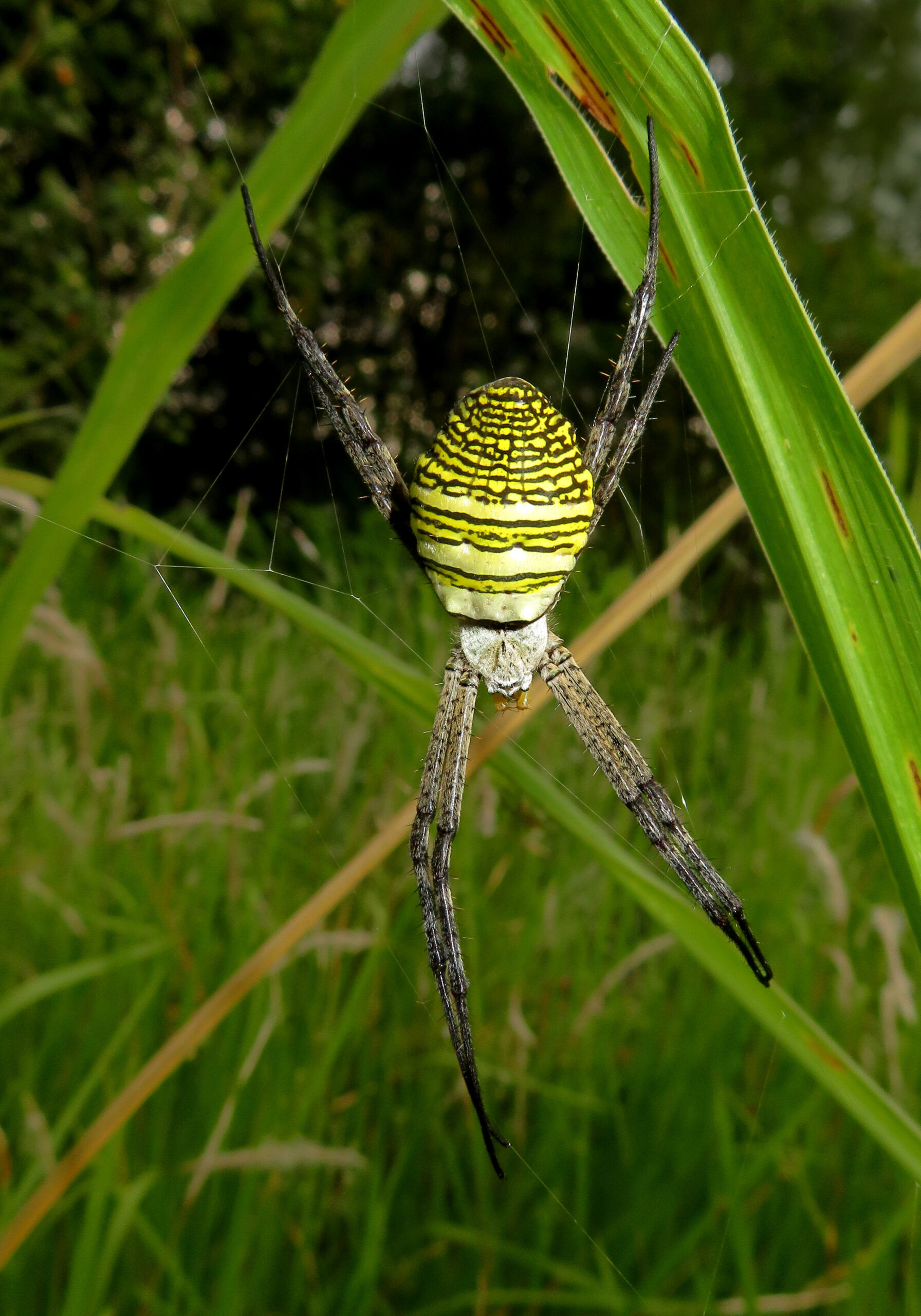
Argiope aemula is a species of orb-weaving spider belonging to the genus Argiope (Family Araneidae, Order Araneae, Class Arachnida). It is widely distributed throughout South and Southeast Asia, southern China, Taiwan, and the Indo-Australian region. The species inhabits tropical rainforests, secondary forests, grasslands, forest edges, agricultural fields, plantations, parks, gardens, and other open habitats with abundant shrubs and tall vegetation, where it constructs large orb webs.
Argiope aemula is a medium to large-sized orb-weaving spider, with females measuring approximately 12–20 mm in body length, while males are much smaller, usually 4–6 mm long. The species exhibits pronounced sexual dimorphism, with females possessing a broad, oval abdomen and long, slender legs, whereas males are considerably more delicate. The abdomen is typically silver-white, yellow, and black, often marked with bold transverse bands or irregular patterns. The cephalothorax is covered with fine silvery hairs, and the legs are banded in black and yellow or brown, giving the spider a striking appearance.
Adults are primarily diurnal, spending much of the day resting at the center of a vertically suspended orb web with their legs paired to form an X-shaped posture. Many individuals construct a conspicuous stabilimentum, a zigzag band of dense white silk running through the center of the web. Although the exact function of the stabilimentum remains debated, it is thought to attract prey, warn larger animals of the web’s presence, or provide camouflage for the spider. When disturbed, the spider may rapidly vibrate its web or drop from it on a silk safety line.
Argiope aemula is a carnivorous predator that feeds mainly on flying insects, including flies, mosquitoes, bees, wasps, butterflies, moths, grasshoppers, and small dragonflies. Prey becomes trapped in the sticky spiral threads of the orb web, after which the spider quickly immobilizes it with venom delivered through its chelicerae and wraps it in silk before feeding. Like other orb-weavers, its venom is adapted for subduing arthropod prey and is not medically significant to humans.
The life cycle consists of egg, spiderling, juvenile, and adult stages. Following mating, the female produces one or more papery brown egg sacs, which are attached to nearby vegetation and contain hundreds of eggs. After hatching, spiderlings remain briefly within the egg sac before dispersing by ballooning, using fine silk threads to travel on air currents. Juveniles undergo multiple molts before reaching maturity, constructing progressively larger orb webs as they grow.
Ecologically, Argiope aemula is an important natural predator of flying insects and contributes significantly to regulating insect populations in forests, grasslands, and agricultural ecosystems. It also serves as prey for birds, lizards, frogs, parasitic wasps, and larger spiders. Because it depends on structurally complex vegetation for web construction and is sensitive to heavy pesticide use and habitat degradation, Argiope aemula is considered a useful indicator of habitat quality, ecosystem health, and regional biodiversity.