

Honey Bees (Tribe Apini)
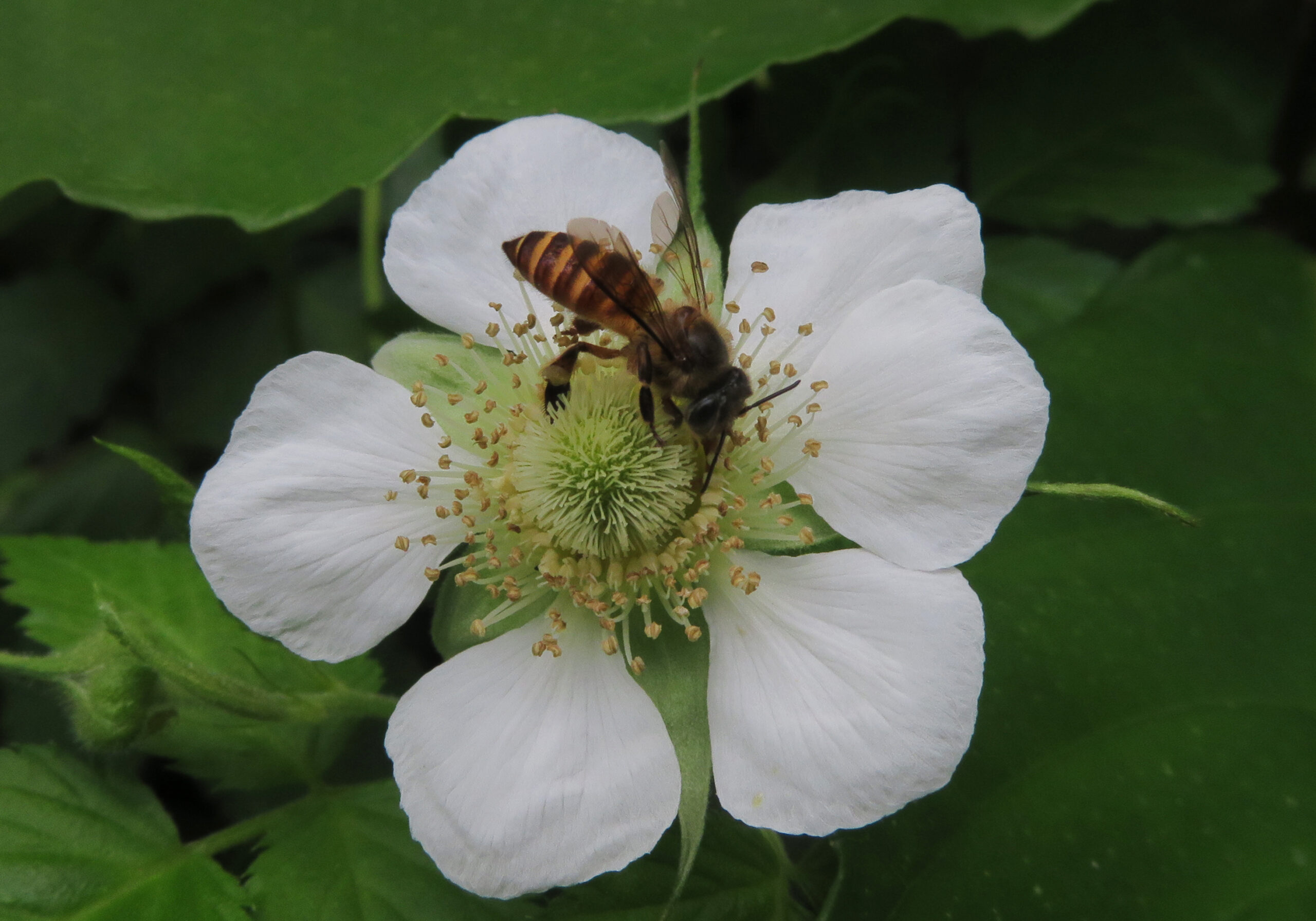
Apini is a tribe of bees within the subfamily Apinae (Family Apidae, Order Hymenoptera). The tribe is best known for containing the true honey bees and comprises the living genus Apis, together with several extinct fossil genera. Modern members are distributed naturally across Africa, Europe, Asia, and the Middle East, while several species have been introduced worldwide through beekeeping. They inhabit tropical rainforests, temperate forests, grasslands, savannas, agricultural landscapes, orchards, parks, gardens, and urban environments wherever flowering plants are abundant.
Bees of the tribe Apini are generally medium-sized, with a robust, densely hairy body adapted for efficient pollen collection. Their coloration typically consists of alternating bands of golden-brown, orange, yellow, and black on the abdomen, although color varies among species and geographic populations. Workers possess specialized pollen baskets (corbiculae) on the hind tibiae for transporting pollen to the nest. They also have well-developed mouthparts for collecting nectar and producing honey.
Members of Apini are diurnal and are among the most effective pollinators of flowering plants. They forage over considerable distances, collecting nectar as an energy source and pollen as the primary protein source for developing larvae. Worker bees communicate the location of profitable food sources through the remarkable waggle dance, a symbolic movement performed on the comb that conveys the direction and approximate distance to flowers relative to the sun.
The life cycle involves complete metamorphosis, consisting of egg, larva, pupa, and adult stages. Apini bees are eusocial, living in highly organized colonies composed of a fertile queen, thousands of sterile female workers, and seasonally produced males (drones). Colonies construct elaborate wax combs made from wax secreted by worker bees. These combs are used for brood rearing and for storing pollen and honey, which serves as a long-term food reserve. New colonies are established through swarming, in which a queen leaves the original nest with a large group of workers to found a new colony.
The tribe includes the living genus Apis, with well-known species such as Apis mellifera (Western Honey Bee), Apis cerana (Eastern Honey Bee), Apis dorsata (Giant Honey Bee), Apis laboriosa (Himalayan Giant Honey Bee), Apis florea (Dwarf Honey Bee), and Apis andreniformis (Black Dwarf Honey Bee). These species differ in nesting behavior, colony size, and geographic distribution but share highly developed social organization.
Ecologically, Apini bees are among the most important pollinators in natural and agricultural ecosystems. They facilitate the reproduction of a vast diversity of wild flowering plants and economically important crops, making them essential for biodiversity, ecosystem stability, and global food production. Honey bees also produce honey, beeswax, propolis, royal jelly, and other products of ecological and economic significance. Because their populations respond to habitat loss, pesticide exposure, diseases, parasites, and climate change, Apini bees are widely regarded as key indicators of environmental health, pollinator conservation, and ecosystem sustainability.