

Tribe Adramini
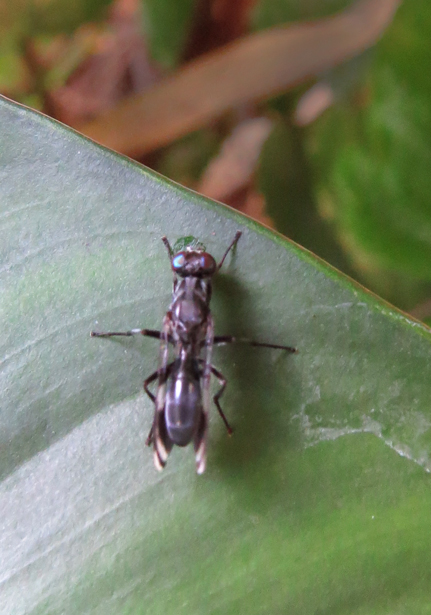
Adramini is a tribe within the subfamily Trypetinae (Family Tephritidae, Superfamily Tephritoidea, Order Diptera), comprising a group of true fruit flies that are primarily distributed in tropical and subtropical regions, especially in Asia and the Indo-Australian region. Members of this tribe are typically associated with forested habitats and areas rich in host plants.
Flies of the tribe Adramini are generally small to medium-sized and exhibit the characteristic features of tephritid flies, including patterned wings with bands, spots, or markings used in visual communication. The body is typically compact, with well-developed compound eyes and short antennae bearing an arista. Coloration may vary but often includes combinations of brown, yellow, or black.
The life cycle involves complete metamorphosis. Larvae are phytophagous and usually develop within plant tissues such as fruits, stems, or other parts of host plants. Females use a specialized ovipositor to insert eggs into plant material, where the larvae feed internally and are protected from external conditions.
Adults are often found resting on vegetation or near host plants and may feed on plant exudates, nectar, or other liquid resources. Many species display characteristic wing movements or postures as part of communication or mating behavior.
The tribe includes genera such as Adrama and related forms, though detailed information on many species remains limited due to their diversity and distribution in less-studied regions.
Ecologically, Adramini species play a role in plant–insect interactions and contribute to ecosystem dynamics as herbivores. While most are not well known economically, some species may affect host plants and have localized importance. They also serve as prey for predators and hosts for parasitoids, contributing to the complexity of ecological food webs.