

Superfamily Achatinoidea
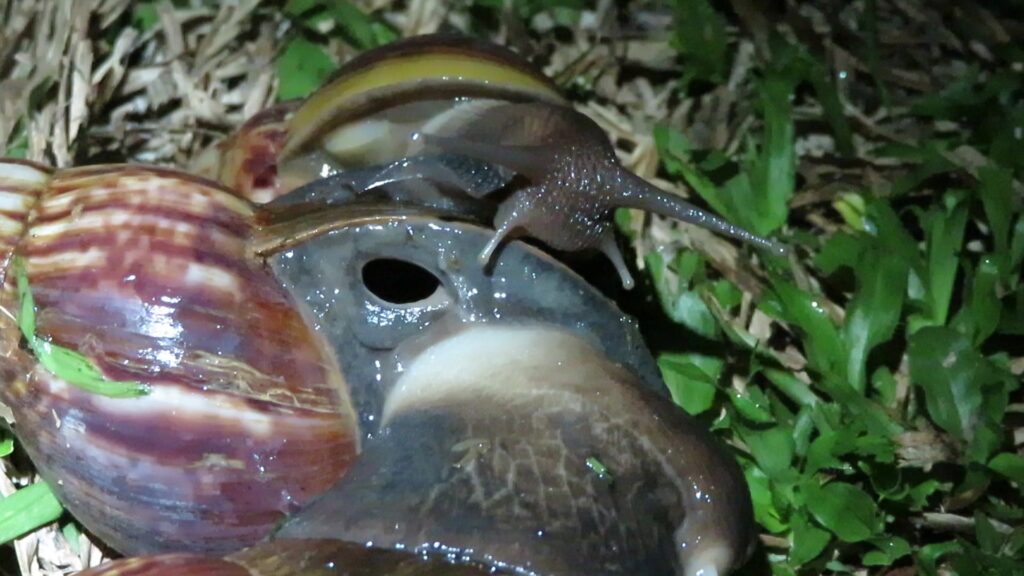
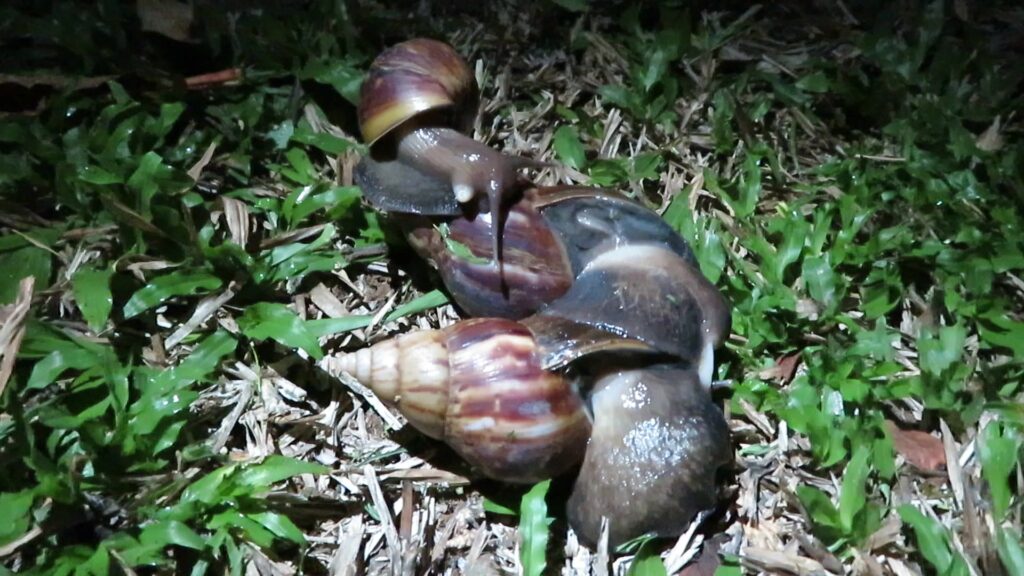
Achatinoidea is a superfamily of terrestrial gastropod mollusks, commonly referred to as land snails. It belongs to the class Gastropoda within the phylum Mollusca and includes lineages adapted to life on land rather than in freshwater or marine environments. The superfamily is particularly associated with tropical and subtropical regions, where warm temperatures, abundant vegetation, and seasonal moisture provide suitable conditions for many species. Its members vary considerably in body size, shell shape, feeding habits, and habitat preferences, reflecting the diversity of ecological niches occupied by terrestrial snails.
Achatinoid snails typically possess a muscular foot used for crawling, a distinct head bearing sensory tentacles, and a shell that protects their soft internal organs. The shell is usually composed largely of calcium carbonate and may be elongated, conical, globose, or more narrowly coiled, depending on the species. Shell coloration can range from pale cream and yellow to brown, reddish brown, or patterned combinations of stripes and bands. These characteristics are useful for identification, although shell appearance can vary within a species according to age, diet, and environmental conditions. The soft body produces mucus that facilitates movement across leaves, soil, bark, and other surfaces.
The classification of Achatinoidea is complex and has changed as researchers have compared anatomical features and genetic evidence. The superfamily is recognized in taxonomic databases, but authorities differ over which families should be included. The family Achatinidae is the best-established core group, while the placement of Ferussaciidae, Subulinidae, and several smaller families has been debated. Molecular research has also found that some traditionally recognized families do not form distinct evolutionary groups, indicating that further taxonomic revision is needed.
Achatinoidea is primarily associated with terrestrial habitats across tropical and subtropical regions, especially Africa and parts of Asia, although its constituent lineages have different distributions. Many species inhabit moist forests, woodland, plantations, gardens, and cultivated areas. Some are adapted to leaf litter and decaying vegetation, while others live beneath stones, within soil crevices, or among plant roots. Species that occur in seasonally dry environments may remain inactive during unfavorable conditions, reducing water loss until humidity rises again.
Feeding habits vary among achatinoid snails. Many consume living or decaying plant material, fungi, algae, and organic deposits on soil and vegetation. Their radula, a flexible feeding structure covered with microscopic teeth, scrapes food into small particles. Some species are generalist feeders, whereas others show stronger preferences for particular food sources. Through feeding and waste production, terrestrial snails can contribute to the decomposition of organic matter and the recycling of nutrients within soil ecosystems.
Reproduction generally involves internal fertilization, and many species are hermaphroditic, possessing both male and female reproductive organs. Individuals may exchange sperm during mating before laying eggs in moist soil or other sheltered locations. Egg number, size, and incubation time differ among species. Hatchlings emerge with small shells and gradually enlarge them as they grow, requiring calcium and suitable environmental conditions for shell formation. Moisture, temperature, food availability, and population density can all influence reproductive success.
The superfamily includes species of considerable ecological and economic significance. Some land snails contribute to soil processes and provide food for birds, mammals, reptiles, amphibians, and predatory invertebrates. Other species can become invasive when transported beyond their native ranges. The giant African land snail, Lissachatina fulica, for example, has established populations in many tropical and subtropical regions and can damage crops and garden plants. Certain land snails can also act as intermediate hosts for parasites, although this risk is specific to particular species and should not be generalized to the entire superfamily.
Habitat destruction, pesticide exposure, changes in soil conditions, and the loss of native vegetation can threaten species with restricted ranges or specialized ecological requirements. At the same time, introduced achatinoid snails may thrive in disturbed environments and become agricultural pests. Conservation and management therefore require species-level identification, knowledge of native distributions, and an understanding of each snail’s ecological role. Protecting natural habitats is important for native diversity, while preventing the transport of invasive species helps reduce ecological and agricultural damage.
Overall, Achatinoidea represents an important group of air-breathing land snails whose diversity reflects a wide range of terrestrial adaptations. Its members influence nutrient cycling, interact with plants and other soil organisms, and form part of many terrestrial food webs. Although the superfamily’s internal classification remains under refinement, continued anatomical and molecular research is improving understanding of its evolutionary history. Accurate identification and conservation of native species are essential for appreciating the group’s biological diversity and managing those species that have become invasive.