

Tribe Achatinini
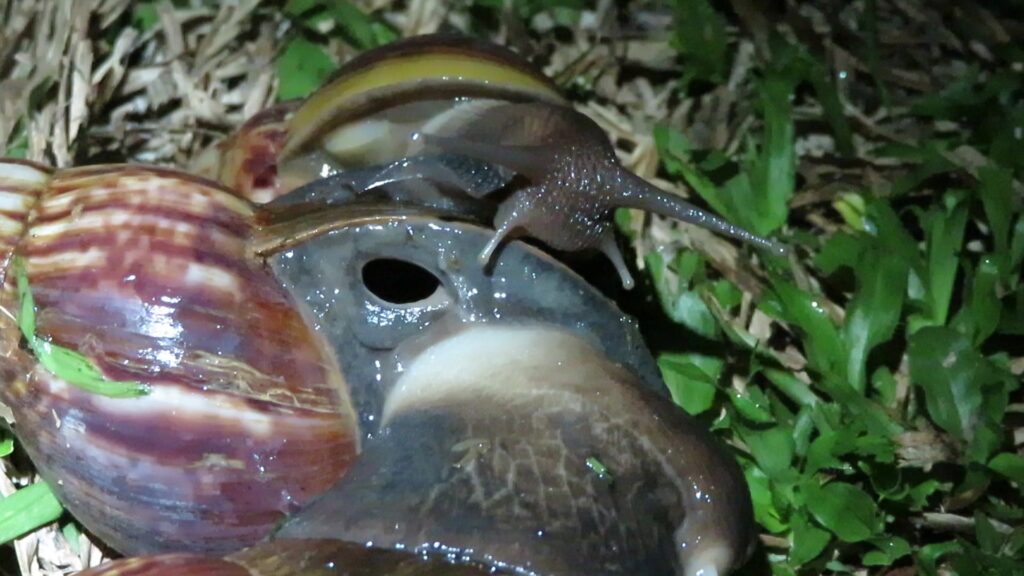
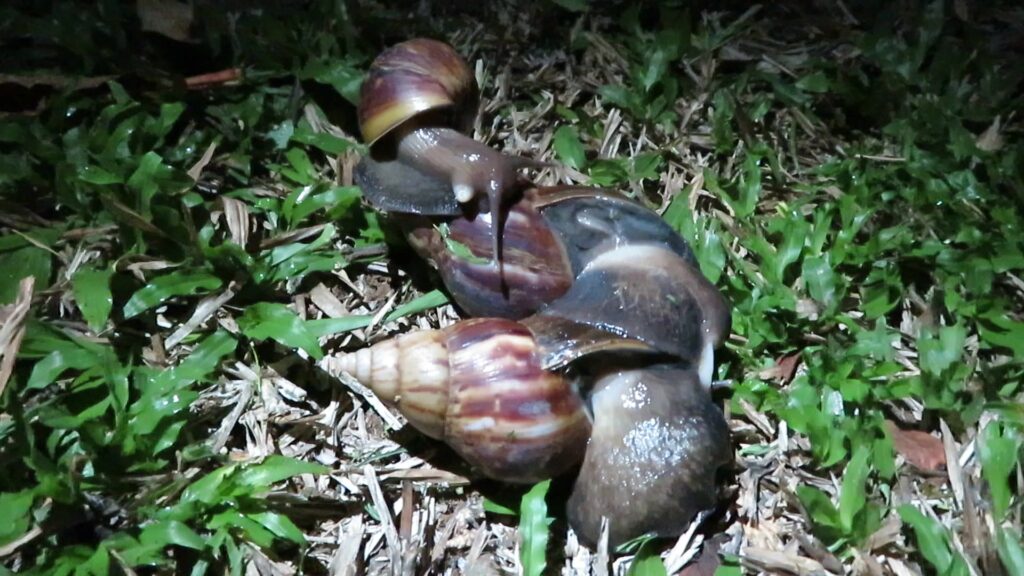
The tribe Achatinini is a taxonomic group of terrestrial gastropod mollusks within the family Achatinidae, traditionally associated with large African land snails. These air-breathing mollusks belong to the order Stylommatophora and are adapted to life on land. Members of this group are recognized broadly by their coiled shells, muscular locomotion, and feeding structures characteristic of land snails. The precise boundaries and classification of groups within Achatinidae have changed across taxonomic treatments, so the composition of Achatinini may vary among references.
Achatinini members generally have elongated, high-spired shells formed from calcium carbonate. The shells are commonly conical or oval-conical, with several whorls that increase in size toward the opening. Coloration may include brown, cream, yellowish, or reddish tones, often arranged in longitudinal streaks, bands, or irregular mottling. Shell size and proportions vary between species, and shell growth continues as the snail matures. The shell protects the animal’s soft body and helps reduce water loss when the snail withdraws into it during unfavorable conditions.
The body is soft and flexible, with a broad, muscular foot that enables movement across soil, leaf litter, rocks, and vegetation. Locomotion occurs through muscular waves along the foot, aided by mucus that lubricates the surface beneath the animal. The head bears two pairs of tentacles. The longer upper pair carries the eyes at the tips, while the shorter lower pair is important for touch and chemical sensing. These sensory organs help the snail investigate its surroundings, find food, and respond to changes in humidity, light, and other environmental conditions.
Achatinini is associated primarily with tropical African land-snail diversity, although the distributions of particular species depend on their taxonomy and natural history. Suitable habitats may include humid forests, woodland edges, dense vegetation, and other environments offering moisture and shelter. Some related large land snails have adapted readily to human-modified habitats, including gardens, plantations, farms, and settlements. They often become active at night or during wet weather, when the risk of dehydration is lower, and retreat to protected locations during hot or dry periods.
Feeding habits are generally centered on plant material and other organic matter. Depending on the species, food may include leaves, tender shoots, fruits, fungi, algae, and decomposing vegetation. Like other gastropods, these snails use a radula, a ribbon-like feeding structure covered with tiny teeth, to scrape and process food. Their feeding can contribute to the breakdown of organic material and nutrient cycling. However, where adaptable species occur in high numbers, feeding on cultivated plants may cause damage to crops and ornamental vegetation.
Reproduction in achatinid land snails typically involves simultaneous hermaphroditism, meaning individuals possess both male and female reproductive organs. Mating may involve the exchange of sperm between individuals, followed by the laying of eggs in moist soil or sheltered places. Reproductive output and development vary according to species, temperature, moisture, and food availability. In favorable environments, some large land snails can grow rapidly and produce multiple clutches, supporting the establishment of substantial populations.
The ecological significance of Achatinini lies in its members’ roles as consumers of vegetation and organic matter, as well as prey for other animals. Their effects can be beneficial in natural decomposition processes but problematic when species are introduced into ecosystems where they are not native. The giant African land snail Lissachatina fulica, for example, is widely recognized as an invasive pest in many tropical and subtropical regions. It consumes a broad range of plants and may compete with native mollusks. Its placement within particular taxonomic subdivisions has varied in different classifications, so it should not automatically be treated as a definitive representative of Achatinini without consulting the relevant taxonomic authority.
Species identification within this group can be challenging because shell color and shape may overlap among related snails. Reliable classification may require consideration of shell sculpture, whorl proportions, reproductive anatomy, geographic range, and molecular evidence. Historical changes in the taxonomy of Achatinidae mean that older sources may use different generic names or tribal arrangements from more recent works.
Overall, Achatinini represents a grouping within the diverse radiation of African terrestrial snails. Its members illustrate the adaptations that allow gastropods to thrive on land, including protective shells, mucus-assisted movement, specialized feeding structures, and reproductive strategies suited to terrestrial habitats. Their ecological roles and, in some cases, invasive potential make the accurate identification and classification of these snails important for biodiversity research, agriculture, and conservation.