

Agate Snails (Subfamily Achatininae)
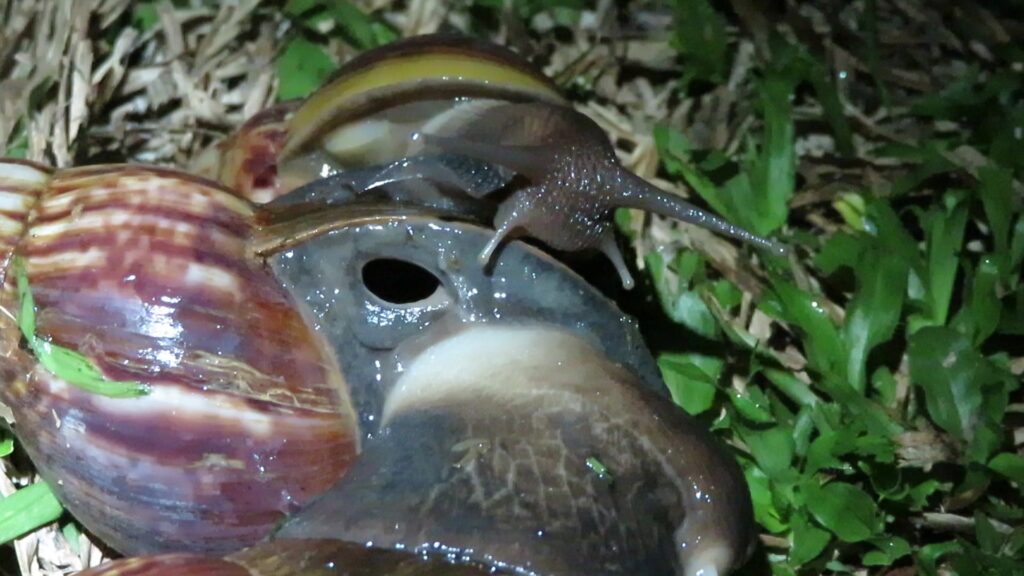
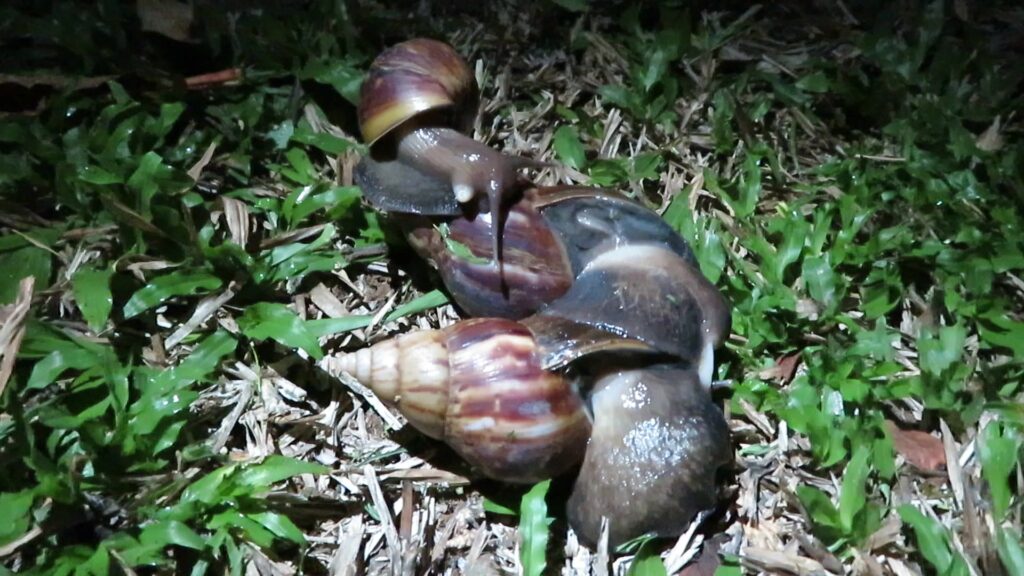
The subfamily Achatininae is a group of terrestrial gastropod mollusks within the family Achatinidae, commonly associated with large African land snails. These snails belong to the order Stylommatophora, a diverse group of air-breathing land snails and slugs. Achatininae includes species known for their elongated, spirally coiled shells, soft muscular bodies, and adaptations to life in terrestrial environments. Some members have become familiar well beyond their native ranges because of their large size, adaptability, and ability to establish populations in introduced habitats.
Members of Achatininae generally possess a high-spired shell that is elongated and conical or oval-conical. The shell consists mainly of calcium carbonate and protects the animal’s soft internal organs from injury, predators, and environmental stress. Its surface may display brown, tan, cream, yellowish, or reddish bands and mottled patterns. Shell dimensions, proportions, and coloration differ between species, and these characteristics are useful for identification when considered alongside anatomical and other taxonomic evidence.
The body is soft and typically grayish, brownish, or pale in coloration, with variation among species and individuals. A broad, muscular foot enables movement over soil, rocks, tree trunks, and vegetation. During locomotion, the snail secretes mucus that lubricates the surface beneath it and helps reduce friction. Two pairs of tentacles extend from the head: the longer upper pair carries the eyes at its tips, while the shorter lower pair helps detect chemical cues and physical contact. These sensory structures assist the snail in locating food, finding shelter, and responding to its surroundings.
Achatininae is associated primarily with tropical Africa, although the distributions of individual species differ. Suitable habitats include moist forests, forest margins, woodland, cultivated land, gardens, and other environments that provide sufficient food and shelter. Many species are most active during humid conditions, particularly at night or after rainfall. During hot or dry weather, they may retreat beneath leaf litter, fallen wood, stones, or other protected places to limit water loss. Their ability to use sheltered microhabitats contributes to survival through periods of unfavorable conditions.
The diet of achatinine snails consists mainly of plant material and other organic matter. Depending on the species and habitat, they may consume leaves, tender shoots, fruits, vegetables, fungi, algae, and decaying vegetation. A specialized feeding structure called the radula bears numerous tiny teeth that scrape and break down food. By feeding on dead plant material, these snails can contribute to decomposition and nutrient cycling. However, species that feed readily on cultivated plants may cause substantial damage in gardens and agricultural areas.
Reproduction in Achatininae typically involves simultaneous hermaphroditism, in which each individual possesses both male and female reproductive organs. Mating commonly involves the exchange of sperm between individuals, after which eggs may be deposited in moist soil or another sheltered location. The number of eggs, frequency of reproduction, and time required to reach maturity vary among species and depend on environmental conditions. In warm, humid settings with abundant food, some species can reproduce successfully and establish dense populations.
Achatininae has particular ecological and economic significance because some of its members are highly adaptable. The giant African land snail, Lissachatina fulica, is a well-known example of an invasive land snail, although its exact generic placement and the boundaries of related taxa have changed across taxonomic treatments. Through human-assisted transport, this species has established populations in numerous regions outside its native range. It can consume a wide variety of crops and ornamental plants, compete with native mollusks, and affect local ecosystems. Under suitable circumstances, it may also participate in the transmission cycle of parasites of public-health concern.
Despite their similarities, species within Achatininae can be difficult to distinguish using shell appearance alone. Shell color and shape may vary with age, habitat, nutrition, and individual variation, while different species may have overlapping characteristics. Reliable identification can therefore require examination of shell details, reproductive anatomy, geographic distribution, and, where available, molecular evidence. Taxonomic classifications within the broader Achatinidae have undergone revision, so scientific names and subfamily boundaries may differ among publications.
The conservation status of species associated with Achatininae varies considerably. Some are capable of exploiting disturbed habitats and expanding rapidly, while others may be vulnerable to habitat loss, environmental degradation, or competition with introduced species. Management approaches must account for these differences: invasive populations may require control to protect crops and native biodiversity, whereas locally restricted species may need habitat protection and further study.
Overall, Achatininae represents an important group of terrestrial snails characterized by elongated shells, mucus-assisted locomotion, flexible feeding habits, and reproductive adaptations suited to land environments. Its members contribute to terrestrial food webs and nutrient cycling, while some species demonstrate how human movement of organisms can transform a native mollusk into a significant invasive pest.