

Kerengga (Genus Oecophylla)
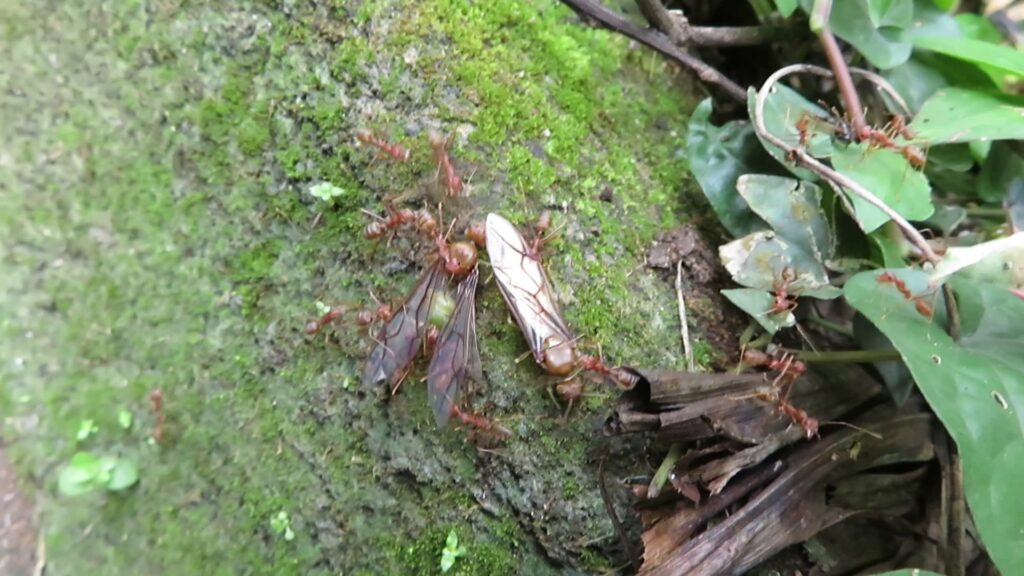
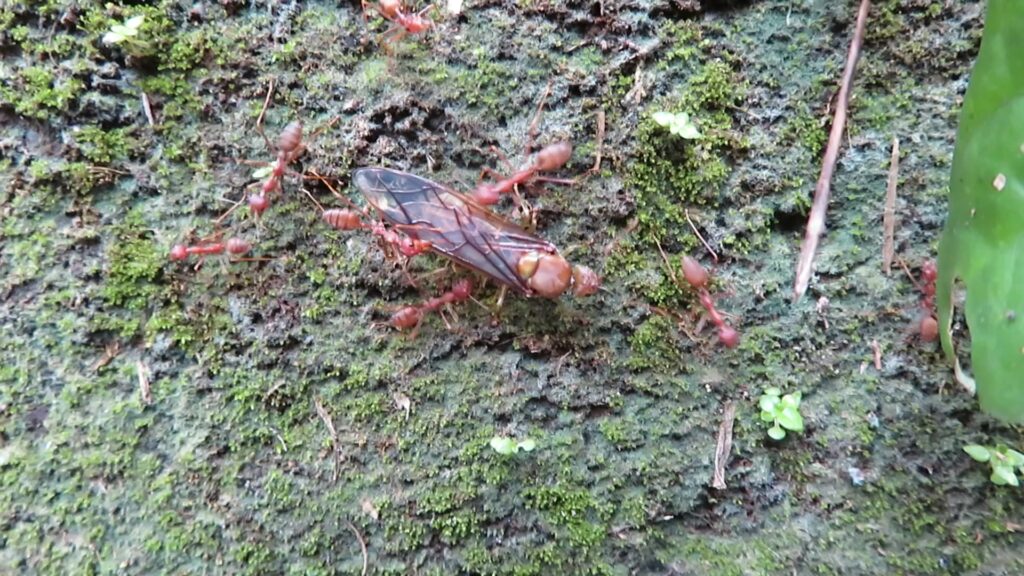
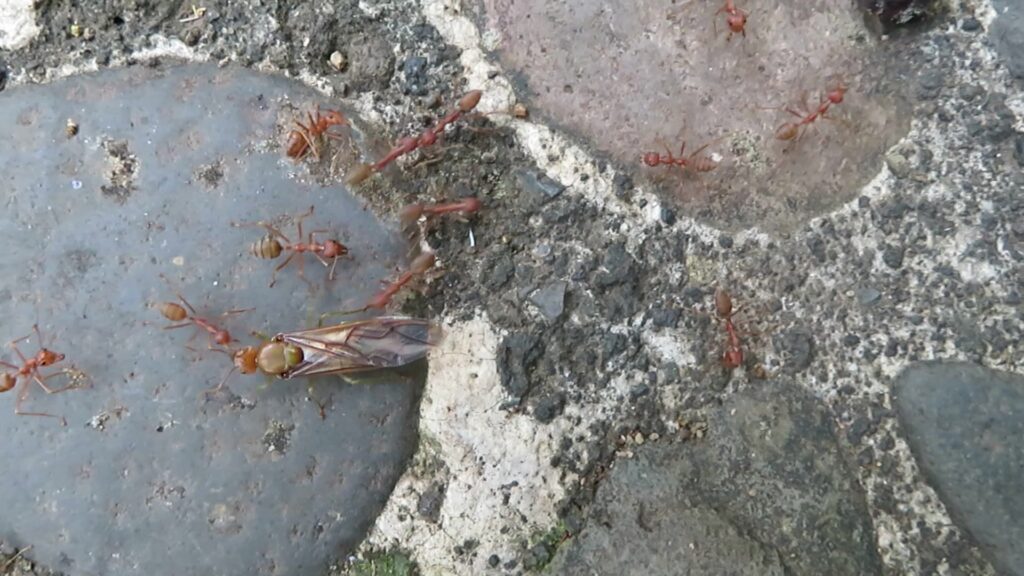
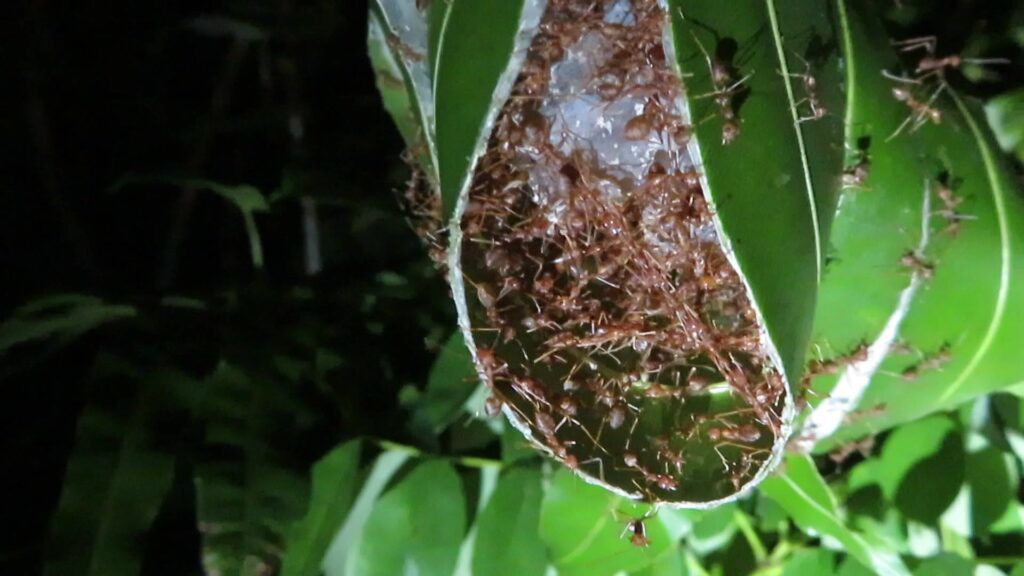
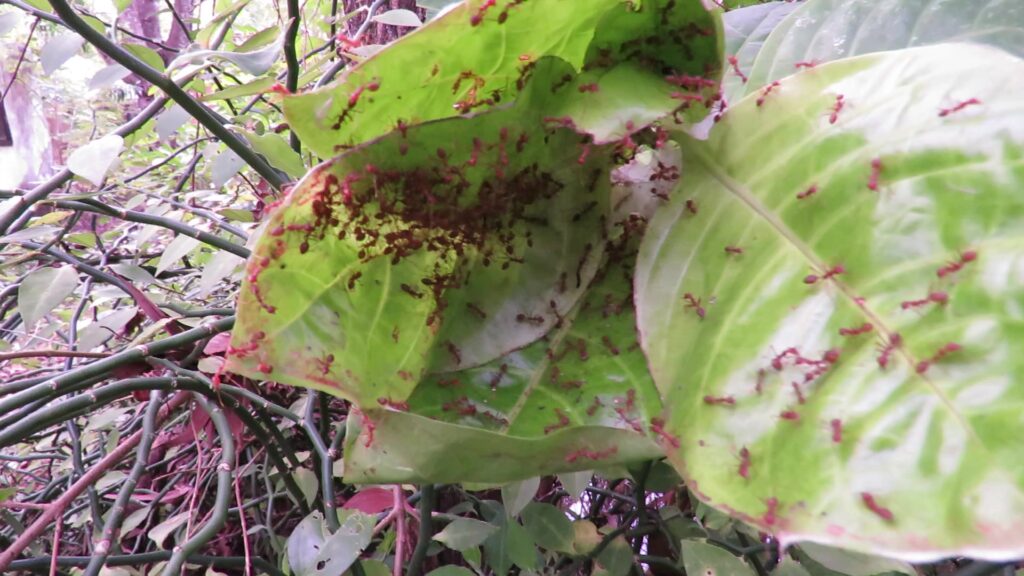
The genus Oecophylla comprises the remarkable weaver ants, a group of arboreal ants belonging to the family Formicidae and subfamily Formicinae. These ants are famous for constructing nests by fastening living leaves together with silk produced by their larvae. They are among the most conspicuous and ecologically influential ants in tropical forests, woodlands, orchards, and agricultural landscapes. The genus contains two living species: the Asian weaver ant (Oecophylla smaragdina) and the African weaver ant (Oecophylla longinoda). Both are known for their cooperative nest construction, aggressive territorial defense, and highly organized colonies.
Weaver ants have elongated bodies, long legs, strong mandibles, and well-developed antennae that allow them to navigate branches, detect food, and communicate with nestmates. Their coloration is typically yellowish orange, reddish orange, or reddish brown, although the exact appearance varies between species, castes, and populations. The abdomen is often darker or differently shaded from the head and thorax. Workers are agile climbers capable of moving rapidly along tree trunks, branches, and leaves. Their powerful jaws help them grasp prey, defend their colonies, and hold leaf edges together during nest construction.
Like other social ants, Oecophylla colonies contain reproductive queens, males during breeding periods, and numerous female workers. Workers perform different tasks according to their age, condition, and the needs of the colony. These tasks include caring for eggs and larvae, gathering food, constructing nests, and defending the colony’s territory. A colony may occupy several nests distributed across one or more trees, with workers traveling along established routes between them. Chemical signals, especially pheromones, allow workers to recruit nestmates to food sources, communicate danger, and coordinate collective responses. The resulting cooperation enables a colony to function as an integrated social unit.
The most distinctive feature of Oecophylla is its unusual method of nest construction. Rather than building nests underground or excavating cavities in wood, workers create enclosed shelters by pulling living leaves together. They may form chains by gripping one another with their mandibles and legs, gradually bringing separate leaves into contact. Other workers carry larvae to the leaf margins and gently press them against the surfaces to release silk. The larvae produce silk from their labial glands, and the workers guide them back and forth to bind the leaves together. Multiple leaves may be joined into a single nest, creating a protected chamber for brood development and shelter.
The genus is restricted naturally to tropical and subtropical regions of the Old World. Oecophylla smaragdina occurs across South and Southeast Asia and parts of the Indo-Australian region, including many islands of the Malay Archipelago. Oecophylla longinoda is native to tropical Africa. Both species favor habitats with sufficient trees and shrubs to support their nests and provide interconnected routes for foraging. They are frequently found in tropical forests, forest margins, plantations, gardens, and orchards. The availability of leafy vegetation, prey, and suitable nesting sites strongly influences their local distribution and colony density.
Weaver ants are primarily diurnal, with workers commonly active during daylight when they patrol foliage and search for food. Their colonies establish territories around occupied trees or groups of trees, and workers aggressively confront intruders that approach nest sites or food resources. When disturbed, they may bite repeatedly with their mandibles and release formic acid as a chemical defense. Workers also recruit nestmates through pheromone trails, allowing a relatively small number of ants to rapidly mobilize a much larger defensive force. Their coordinated aggression can deter many competing ants and predatory arthropods, making them dominant occupants of some tropical tree canopies.
The diet of Oecophylla consists mainly of insects and other small arthropods, supplemented by sugary liquids and occasional scavenged food. Workers hunt caterpillars, flies, beetles, termites, spiders, and other insects, often overwhelming larger prey through coordinated attacks. Their predatory activity can be particularly intense on trees where colonies maintain well-established foraging trails. Weaver ants also collect honeydew from sap-feeding insects, including aphids, scale insects, and treehoppers. In exchange for these sugary secretions, they may protect the insects from predators and parasitoids. This mutualistic relationship can benefit the ants but sometimes creates agricultural problems when the protected insects damage crops.
Reproduksi dan perkembangan koloni mengikuti pola umum semut. Selama periode reproduksi, semut jantan bersayap dan ratu perawan meninggalkan koloni mereka untuk penerbangan kawin. Setelah kawin, ratu mendirikan koloni baru dan mulai memproduksi telur. Pekerja pertama berkembang di bawah perawatannya, setelah itu mereka memikul tanggung jawab utama dalam mencari makan, membangun sarang, dan merawat larva. Seiring pertumbuhan koloni, pekerja membangun sarang tambahan dan memperluas area yang mereka pertahankan. Koloni dapat bertahan untuk jangka waktu yang lama dalam kondisi yang menguntungkan, meskipun masa hidup, ukuran koloni, dan hasil reproduksi bervariasi tergantung pada habitat, ketersediaan makanan, dan tekanan lingkungan.
Pentingnya ekologis Oecophylla sangat jelas terlihat di kanopi hutan tropis dan sistem pertanian. Sebagai predator aktif, semut penenun mengonsumsi sejumlah besar serangga herbivora dan memengaruhi kelimpahan dan perilaku arthropoda lainnya. Kehadiran teritorial mereka dapat mengubah serangga dan spesies semut pesaing mana yang dapat menempati pohon. Mereka juga merupakan bagian dari jaring makanan, berfungsi sebagai mangsa bagi beberapa burung, reptil, dan hewan pemakan semut lainnya. Interaksi mereka dengan serangga penghasil embun madu menggambarkan bagaimana satu genus semut dapat memengaruhi beberapa lapisan hubungan ekologis, mulai dari serangga pemakan tumbuhan hingga predator dan parasitoid.
Semut penenun memiliki sejarah panjang penggunaan dalam pengelolaan hama biologis. Di beberapa bagian Asia dan Afrika, petani telah mendorong koloni mereka di tanaman seperti mangga, jeruk, jambu mete, dan pohon buah lainnya untuk mengurangi kerusakan yang disebabkan oleh hama serangga. Patroli mereka yang gigih dan serangan terkoordinasi dapat membantu menekan ulat dan serangga pemakan buah tertentu, terkadang mengurangi kebutuhan akan insektisida kimia. Namun, manfaat mereka bergantung pada tanaman dan komunitas hama lokal. Perilaku agresif mereka dapat mempersulit panen, dan perlindungan mereka terhadap serangga penghasil embun madu dapat meningkatkan kelimpahan beberapa hama pertanian. Oleh karena itu, pengelolaan yang efektif membutuhkan pemahaman tentang keseimbangan antara manfaat predator mereka dan interaksi ekologis lainnya.
Terlepas dari kemampuan adaptasinya, semut Oecophylla dapat terpengaruh oleh deforestasi, fragmentasi habitat, paparan pestisida, dan penebangan pohon yang sesuai. Di lanskap pertanian, insektisida spektrum luas dapat membunuh pekerja secara langsung atau mengurangi populasi mangsa yang bergantung pada koloni. Hilangnya vegetasi yang terhubung juga dapat membatasi akses ke tempat bersarang dan makanan. Memelihara pohon dan semak, melestarikan koridor habitat, dan menggunakan metode pengelolaan hama yang tepat sasaran dapat membantu mempertahankan manfaat ekologisnya. Karena semut penenun mencolok dan kompleks secara sosial, mereka juga merupakan subjek yang berharga untuk penelitian tentang komunikasi hewan, kerja sama, perilaku kolektif, dan evolusi organisasi sosial.
Secara keseluruhan, genus Oecophylla mewakili contoh luar biasa dari adaptasi sosial di antara serangga. Anggotanya menggabungkan konstruksi sarang berbasis sutra secara kooperatif, perburuan terkoordinasi, komunikasi kimia, dan pertahanan teritorial yang agresif untuk berkembang di kanopi pohon tropis. Sarang mereka menunjukkan bagaimana arsitektur hewan dapat muncul dari aktivitas terkoordinasi banyak individu, sementara perilaku predator mereka memberi mereka kepentingan ekologis dan pertanian yang cukup besar. Sebagai penghuni kanopi yang dominan dan musuh alami hama tanaman, semut penenun menempati posisi yang khas dalam ekosistem tropis.